• Find My Drone

Best Portable Chargers for DJI Drones in 2026: 7 Tested Options

Updated

By Paul Posea

Best Portable Chargers for DJI Drones in 2026: 7 Tested Options - drone reviews and comparison

Anker Prime 20,000mAh Power Bank (200W) - 200W output charges any DJI drone at full speed

Anker Prime 20,000mAh Power Bank (200W) - undefined
Buy Now
Compatible with:
DJI Mini 3DJI Mini 4 ProDJI Mini 5 ProDJI FlipDJI Air 3SDJI Mavic 4 Pro (single battery)All USB-C PD drones
FeatureSpec
Capacity20,000 mAh (72Wh)
Output200W max (single USB-C: 140W)
Ports2x USB-C (140W each), 1x USB-A (22.5W)
Input170W USB-C (recharges in ~30 min)
Weight1.1 lbs (500g)
Airline SafeYes (under 100Wh)
Pros and Cons
Pros
  • 140W single-port output charges even the Mavic 4 Pro battery at full USB-C speed, not just the smaller Mini and Flip batteries
  • Recharges itself in about 30 minutes with a 170W charger, so turnaround between charging sessions is fast
  • 72Wh is under the 100Wh airline limit, making it legal in carry-on luggage on any commercial flight
  • Two USB-C ports mean you can charge a drone battery and your phone simultaneously
Cons
  • At $110 this costs more than an extra drone battery for most DJI models. The math only works if you charge multiple devices in the field
  • 20,000mAh charges a Mini battery about 3-4 times, or a Mavic 4 Pro battery roughly once. For all-day shoots, you still run out
  • At 500g it is heavier than most 20K power banks because of the higher output circuitry

Anker 737 Power Bank 24,000mAh (140W) - 24K mAh with 140W output for larger drones

Anker 737 Power Bank 24,000mAh (140W) - undefined
Buy Now
Compatible with:
DJI Mini 3DJI Mini 4 ProDJI Mini 5 ProDJI FlipDJI Air 3SDJI Mavic 4 Pro (single battery)All USB-C PD drones
FeatureSpec
Capacity24,000 mAh (86.4Wh)
Output140W max (single USB-C: 140W)
Ports2x USB-C (140W), 1x USB-A (18W)
Input140W USB-C (recharges in ~40 min)
Weight1.3 lbs (600g)
Airline SafeYes (under 100Wh)
Pros and Cons
Pros
  • 140W single-port output matches the Anker Prime's charging speed at $20 less, making it the better value for high-wattage drone charging
  • 24,000mAh at 86.4Wh gives you slightly more capacity than the Prime while staying comfortably under the 100Wh airline limit
  • Digital display shows remaining capacity, output wattage, and estimated time to empty or full
  • Recharges in about 40 minutes with a 140W charger, which is fast enough to top off between driving to different flight locations
Cons
  • The form factor is a thick brick shape rather than a slim slab, which makes it harder to pack in tight bags
  • 600g is the heaviest power bank on this list. You feel the weight in a drone backpack
  • The 140W port shares power when both USB-C ports are active, dropping each to 70-100W

UGREEN 25,000mAh Power Bank (145W) - High capacity with 145W output at a mid-range price

UGREEN 25,000mAh Power Bank (145W) - undefined
Buy Now
Compatible with:
DJI Mini 3DJI Mini 4 ProDJI Mini 5 ProDJI FlipDJI Air 3SAll USB-C PD drones
FeatureSpec
Capacity25,000 mAh (90Wh)
Output145W max (single USB-C: 100W)
Ports2x USB-C (100W), 1x USB-A (22.5W)
Input100W USB-C (recharges in ~75 min)
Weight1.3 lbs (590g)
Airline SafeYes (under 100Wh)
Pros and Cons
Pros
  • 25,000mAh at 90Wh is the sweet spot: enough to charge a Mini battery 4-5 times while staying under the 100Wh airline limit
  • 100W single-port output handles DJI Mini, Flip, and Air series batteries at full USB-C charging speed
  • Digital display shows remaining capacity in percentage and watts, so you know exactly how many charges you have left
  • At $70 it is significantly cheaper than the Anker Prime while offering more raw capacity
Cons
  • 100W max per port is enough for Mini and Air batteries, but the Mavic 4 Pro battery accepts higher wattage that this cannot deliver
  • 1.3 lbs is noticeable in a drone backpack alongside all the other gear
  • No display of individual port output. The screen shows total draw but not per-port wattage

Baseus Blade 2 Power Bank 20,000mAh (65W) - Ultra-slim 65W power bank that fits in a laptop sleeve

Baseus Blade 2 Power Bank 20,000mAh (65W) - undefined
Buy Now
Compatible with:
DJI Mini 3DJI Mini 4 ProDJI Mini 5 ProDJI FlipDJI Air 3SAll USB-C PD drones
FeatureSpec
Capacity20,000 mAh (72Wh)
Output65W max (single USB-C)
Ports2x USB-C (65W), 1x USB-A (22.5W)
Input65W USB-C (recharges in ~90 min)
Weight0.9 lbs (410g)
Airline SafeYes (under 100Wh)
Form FactorUltra-slim (0.7 inches thick)
Pros and Cons
Pros
  • 0.7 inches thick makes it the slimmest 20K power bank on this list. It slides into a laptop sleeve or jacket pocket without bulk
  • At $46 it is the best price-to-capacity ratio for a 65W USB-C PD power bank
  • 65W is enough to charge Mini, Flip, and Air series batteries at their full USB-C acceptance rate
  • 410g is light enough to carry in a drone backpack without adding meaningful weight
Cons
  • 65W max output will not charge a Mavic 4 Pro battery at full speed. It works, but slower than a 100W+ bank
  • The slim form factor means thinner internal components. Long-term durability reports are mixed compared to Anker's track record
  • No output wattage display. You see remaining percentage but not how fast the connected device is actually charging

INIU 25,000mAh Power Bank (65W) - Budget 25K bank with 65W USB-C PD

INIU 25,000mAh Power Bank (65W) - undefined
Buy Now
Compatible with:
DJI Mini 3DJI Mini 4 ProDJI Mini 5 ProDJI FlipDJI Air 3SAll USB-C PD drones
FeatureSpec
Capacity25,000 mAh (90Wh)
Output65W max (single USB-C)
Ports1x USB-C (65W), 2x USB-A (22.5W)
Input45W USB-C (recharges in ~3 hours)
Weight1.1 lbs (490g)
Airline SafeYes (under 100Wh)
Pros and Cons
Pros
  • 25,000mAh for $36 is the best raw capacity per dollar on this list. Charges a Mini battery 4-5 times from a single charge
  • 65W USB-C PD output handles Mini, Flip, and Air series batteries at their full USB-C acceptance rate
  • 90Wh stays under the 100Wh airline limit with comfortable margin
  • Two USB-A ports let you charge phones and accessories alongside the drone battery
Cons
  • 45W input charging means the bank itself takes about 3 hours to recharge, which is 2-4x slower than premium options
  • Only one USB-C port. If you want to charge two devices via USB-C simultaneously, look at the Ugreen or Anker options
  • Build quality is functional but does not match Anker or Baseus. The plastic feels cheaper and the display is basic

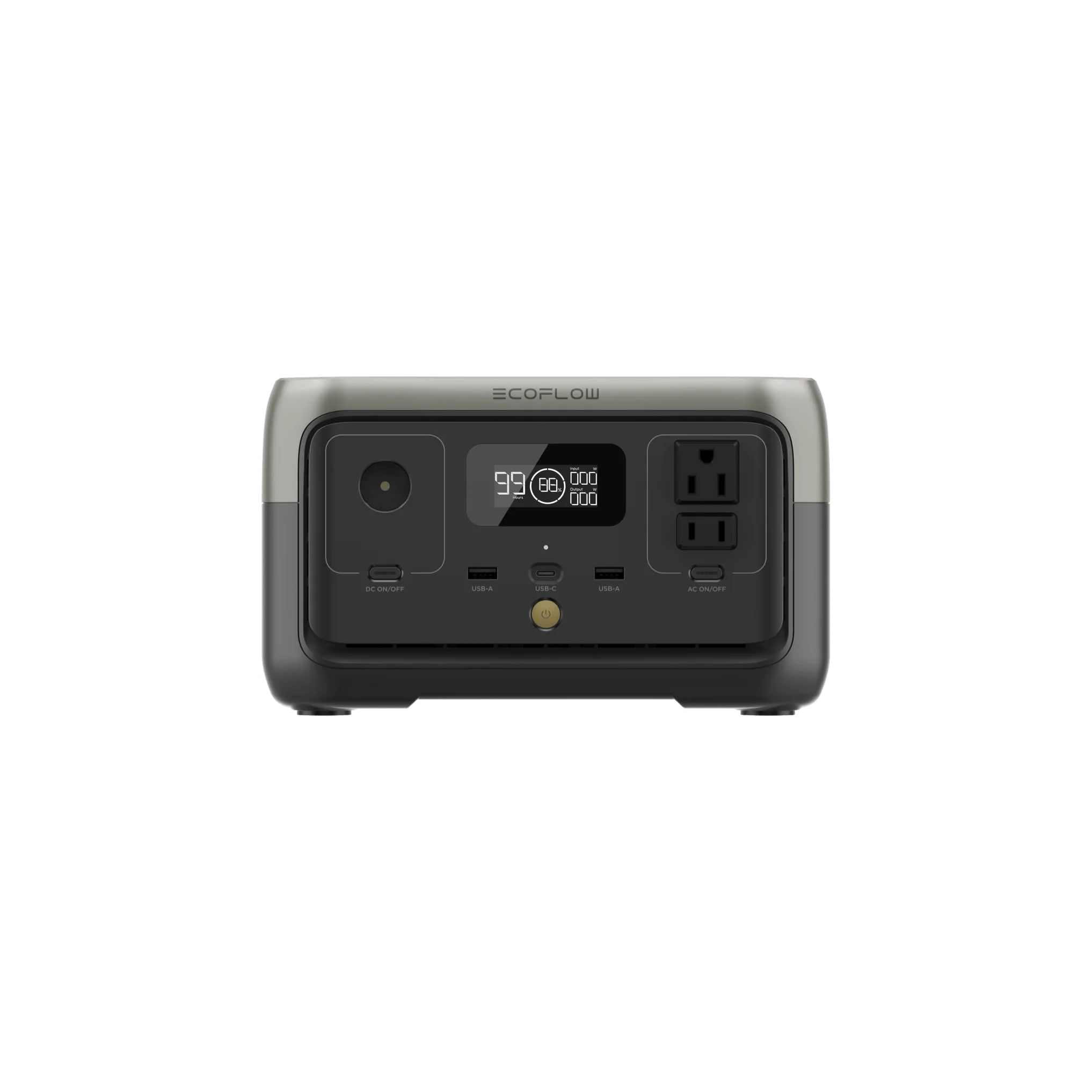
EcoFlow River 2 Portable Power Station - 256Wh power station for multi-battery field charging

EcoFlow River 2 Portable Power Station - undefined
Buy Now
Compatible with:
All DJI dronesAll USB-C dronesAny drone with a wall charger
FeatureSpec
Capacity256Wh (20,000mAh equivalent at 12.8V)
AC Output300W (600W surge)
USB-C Output100W
Ports2x AC, 1x USB-C (100W), 1x USB-A, 1x car outlet
Input360W AC (recharges in ~60 min), solar compatible (110W)
Weight7.7 lbs (3.5 kg)
Dimensions9.6 x 8.5 x 5.3 in
Pros and Cons
Pros
  • AC outlets mean you can plug in the actual DJI wall charger or charging hub, charging batteries exactly like you do at home
  • 256Wh charges a Mini battery 8-10 times or a Mavic 4 Pro battery 2-3 times, covering a full day of flying for most pilots
  • Solar compatible (110W input) for multi-day trips where you cannot access a wall outlet
  • 60-minute recharge from a wall outlet is fast for a power station this size
Cons
  • 7.7 lbs is heavy. This does not go in a backpack for a hike. It stays in the car or at a base camp
  • At $200, it costs more than several extra drone batteries and only makes financial sense if you charge multiple devices regularly
  • Not airline-legal. The 256Wh battery exceeds the 100Wh carry-on limit and is prohibited in checked luggage

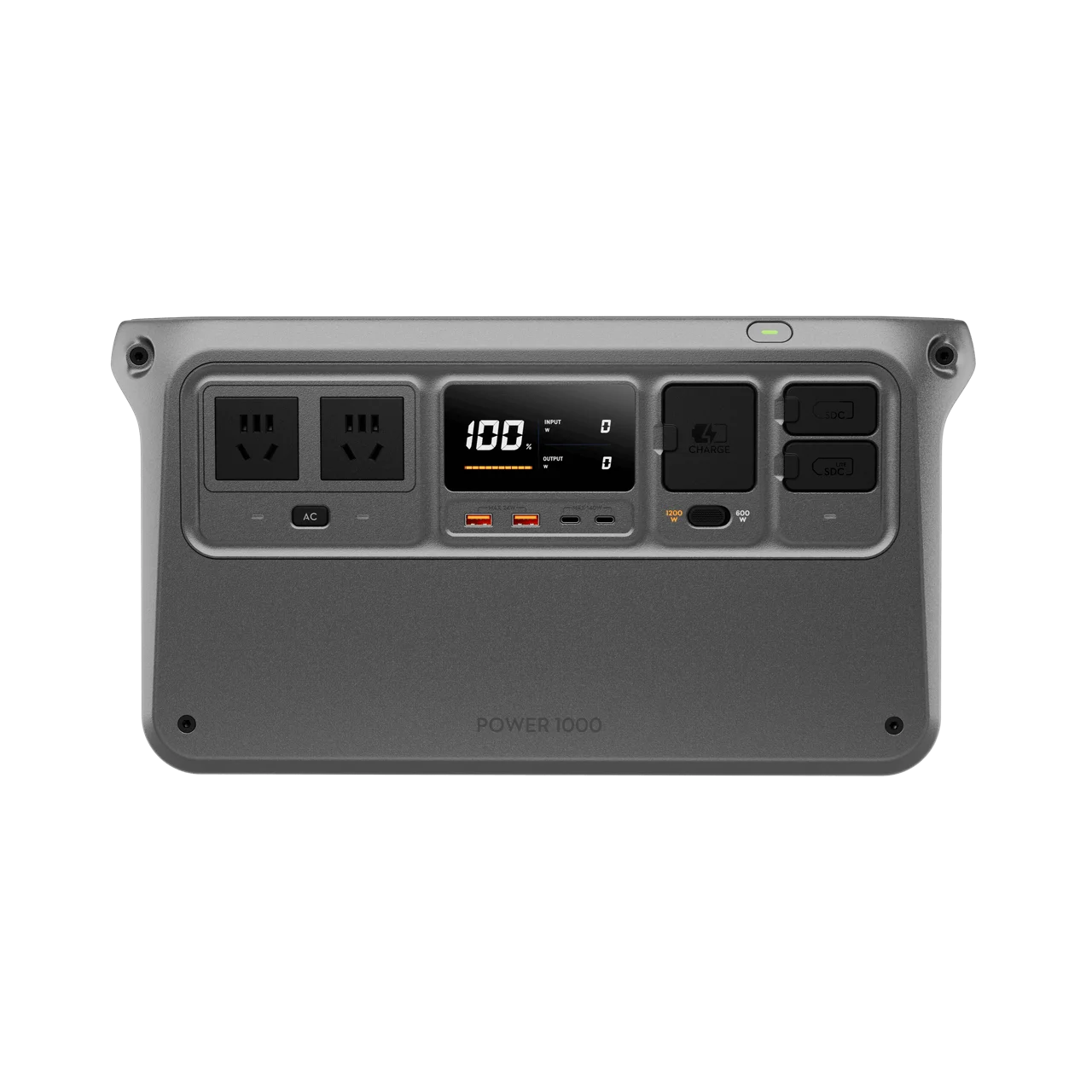
DJI Power 1000 Portable Power Station - 1024Wh station with dedicated SDC drone charging ports

DJI Power 1000 Portable Power Station - undefined
Buy Now
Compatible with:
All DJI drones (SDC fast-charge)All USB-C dronesAny drone with a wall charger
FeatureSpec
Capacity1024Wh
AC Output2200W (2600W surge)
USB-C Output140W (x2 ports)
SDC OutputDedicated DJI drone fast-charge ports (x2)
Ports2x AC, 2x USB-C (140W each), 2x USB-A, 2x SDC, 1x car outlet
Input1200W AC (recharges to 80% in 37 min), solar (800W max)
Weight28.2 lbs (12.8 kg)
Dimensions17.2 x 9.1 x 8.7 in
Pros and Cons
Pros
  • SDC ports charge DJI drone batteries at the same speed as a wall outlet, which USB-C power banks cannot match for larger batteries
  • 1024Wh charges a Mini battery 30+ times or a Mavic 4 Pro battery 8-10 times. Enough for multi-day professional shoots without grid power
  • Recharges to 80% in 37 minutes from a wall outlet, which is faster than most drone batteries charge themselves
  • 2200W AC output powers anything from drone chargers to laptops to small appliances. Doubles as an emergency home backup
Cons
  • At $699 this costs more than many drones it charges. Only makes sense for professionals who fly all day or need off-grid power regularly
  • 28 lbs. This is car-only equipment, not something you carry to a launch site
  • Not airline-legal. At 1024Wh it far exceeds the 100Wh carry-on limit and cannot be checked either

How We Chose the Best Portable Chargers for DJI Drones

USB-C Power Delivery is the standard that makes field charging work. Without it, a power bank is just a phone charger that happens to have a USB-C port. We filtered for:

  • 65W minimum USB-C PD output. This is the floor for charging current DJI drone batteries at a reasonable speed. Below 65W, the battery either charges slowly or the drone's charging circuit rejects the power source entirely. All five power banks on this list deliver 65W or more.
  • Airline-legal capacity (for power banks). FAA and IATA rules allow lithium batteries under 100Wh in carry-on luggage without airline approval. Between 100-160Wh you need airline permission. Above 160Wh is prohibited. All five power banks on this list are under 100Wh. The two power stations exceed this limit and are car-only.
  • Charges-per-bank ratio. A 20,000mAh / 72Wh power bank charges a Mini battery about 3-4 times. A 25,000mAh / 90Wh bank gets 4-5 charges. We calculate real-world charges (accounting for conversion losses) rather than using the theoretical maximum.
  • Recharge speed of the bank itself. A power bank that takes 4 hours to recharge is only useful once per day. Banks that recharge in 30-90 minutes can be topped off between sessions, which changes how many drone batteries they effectively cover.

Best Portable Chargers for DJI Drones by Budget

Match your budget and drone to the right charger:

ChargerPriceCapacityOutputMini ChargesAir/Flip ChargesAirline Legal
INIU 25K (65W)$3690Wh65W4-5x2-3xYes
Baseus Blade 2 (65W)$4672Wh65W3-4x2xYes
UGREEN 25K (145W)$7090Wh100W4-5x2-3xYes
Anker 737 (140W)$9086Wh140W4x2-3xYes
Anker Prime (200W)$11072Wh140W3-4x2xYes
EcoFlow River 2$200256Wh300W AC10+x5-6xNo
DJI Power 1000$6991024Wh2200W AC30+x15+xNo

Note: "Mini Charges" assumes a DJI Mini 3/4 Pro standard battery (~18Wh). "Air/Flip Charges" assumes a DJI Air 3S or Flip battery (~30-35Wh). Real-world numbers are 10-15% lower than theoretical due to conversion losses.

USB-C Power Banks: What Wattage Does Your DJI Drone Need?

Every DJI drone battery has a maximum USB-C acceptance rate. Exceeding it is fine (the battery only pulls what it needs), but going below it either slows charging dramatically or prevents charging entirely.

Minimum 30W: DJI Mini 3, Mini 4K

The older Mini batteries are the easiest to charge from a power bank. Even a basic 30W USB-C power bank works. Any charger on this list is more than enough.

Minimum 45-65W: DJI Flip, Mini 4 Pro, Mini 5 Pro, Air 3S

These drones have larger batteries and faster charging circuits. A 65W power bank charges them at full USB-C speed. Below 45W, the battery may not charge at all or will charge extremely slowly. All five power banks on this list clear this threshold.

Minimum 65-100W: DJI Mavic 4 Pro (single battery)

The Mavic 4 Pro battery is large (6654mAh). It accepts USB-C charging but at a higher wattage. A 65W bank will charge it, but slowly. A 100W+ bank (UGREEN, Anker 737, or Anker Prime) charges it at a more practical speed. For full-speed charging, the DJI 240W adapter and charging hub are still necessary, which is where the power stations (EcoFlow, DJI Power) come in.

The airline math

FAA and IATA rules: lithium batteries under 100Wh are allowed in carry-on without restriction. Between 100-160Wh, you need airline approval (most airlines grant it). Above 160Wh is banned from aircraft entirely. All five power banks on this list are under 100Wh. The EcoFlow River 2 (256Wh) and DJI Power 1000 (1024Wh) cannot fly on any airline and must be transported by car.

Power Stations: When a Power Bank Is Not Enough

Power banks are great for charging 2-5 batteries in the field. But if you fly professionally and need to charge a full fleet of batteries without grid access, a portable power station is the tool.

EcoFlow River 2 ($200)

EcoFlow River 2 Portable Power Station

The River 2 is the entry point for power stations that make sense for drone pilots. At 256Wh, it charges a Mini battery 8-10 times or a Mavic 4 Pro battery 2-3 times. The AC outlets mean you plug in your actual DJI charger or charging hub, so the batteries charge at the same speed as they do at home.

At 7.7 lbs it lives in the trunk of your car or at a base camp, not in a backpack. Solar compatible at 110W input, so you can recharge it on multi-day camping or overlanding trips. Recharges from a wall outlet in about 60 minutes.

DJI Power 1000 ($699)

DJI Power 1000 Portable Power Station

The DJI Power 1000 exists for professionals who fly all day in locations without power. 1024Wh charges a Mavic 4 Pro battery 8-10 times. That is a full day of professional shooting from a single charge of the station.

The dedicated SDC ports are the feature that separates it from generic power stations. SDC charges DJI batteries at the same speed as DJI's own wall adapters, which USB-C cannot match for the larger Mavic and Inspire batteries. The 2200W AC output also powers the DJI 240W parallel charging hub at full speed.

At 28 lbs and $699, this is professional equipment for professional workflows. If you fly a Mini on weekends, a $36 INIU power bank does everything you need.

Our Verdict: Best Portable Chargers for DJI Drones in 2026

Seven chargers from $36 to $699. Most drone pilots need one of the five power banks. Professionals who fly all day in the field need one of the two power stations.

Anker Prime 20,000mAh ($110)

The best power bank for pilots who fly larger drones. 140W single-port output charges any DJI battery at full USB-C speed.

Recharges itself in 30 minutes and stays under 100Wh for airline travel. The price premium over the 737 buys faster self-recharging and a more compact form factor.

Anker 737 24,000mAh ($90)

Best value high-wattage option. 140W output, 86.4Wh capacity, airline legal. More capacity than the Prime at $20 less.

The tradeoff is a thicker brick shape and slightly slower self-recharging (40 min vs 30 min). If form factor does not matter to you, the 737 is the better deal.

UGREEN 25,000mAh ($70)

Best mid-range pick. 100W output handles everything up to the Air 3S at full speed. 90Wh is the most capacity you can get while staying airline-legal.

Two USB-C ports, digital display, and $70 makes this the sweet spot for most drone pilots who do not need 140W output for a Mavic.

Baseus Blade 2 20,000mAh ($46)

Best for travel. Ultra-slim at 0.7 inches, 410g, slides into a laptop sleeve or jacket pocket.

65W output covers Mini, Flip, and Air batteries. If you want a power bank that disappears into your bag and you do not need to charge a Mavic, this is the one.

INIU 25,000mAh ($36)

Best budget pick. 25,000mAh at 90Wh for $36 is the most capacity per dollar on this list.

The slow self-recharging (3 hours) and single USB-C port are the tradeoffs. For weekend flyers who charge the bank overnight and need a few extra batteries in the field, this covers it.

EcoFlow River 2 ($200)

Best compact power station. 256Wh, AC outlets, solar compatible, 7.7 lbs.

Plug in your DJI wall charger and charge batteries exactly as you do at home. For car-based shoots, camping trips, and multi-location days where a power bank runs out.

DJI Power 1000 ($699)

Best for professionals. 1024Wh, SDC fast-charge ports for DJI drones, 2200W AC output.

The only charger on this list that charges DJI batteries at wall-speed without using a wall outlet. Overkill for hobbyists, essential for professionals who fly 8+ batteries per day in the field.

FAQ

Yes, if the power bank supports USB-C Power Delivery (PD) at 65W or higher. All DJI drones made since 2023 (Mini 3, Mini 4 Pro, Mini 5 Pro, Flip, Air 3S, Mavic 4 Pro) charge via USB-C. You connect the power bank directly to the drone's USB-C port or to the charging hub. The battery charges the same way it does from a wall outlet, just from the portable battery instead. Make sure the power bank explicitly lists USB-C PD at 65W+, not just USB-C.

About 3-4 times from a full charge, accounting for conversion losses. A DJI Mini 3 or Mini 4 Pro standard battery is roughly 18Wh. A 20,000mAh / 72Wh power bank has about 60Wh of usable energy after losses. That is 3 full charges of a Mini battery, sometimes 4 if conditions are good. A 25,000mAh / 90Wh bank gets 4-5 charges.

If it is under 100Wh, yes, in carry-on luggage only. FAA and IATA rules prohibit lithium batteries in checked luggage regardless of size. Under 100Wh is allowed without restriction. Between 100-160Wh requires airline approval. Above 160Wh is banned entirely. All five portable power banks on this list (INIU, Baseus, UGREEN, Anker 737, Anker Prime) are under 100Wh and airline-legal. The EcoFlow and DJI Power stations exceed this limit and cannot fly.

For most current DJI drones (Flip, Mini 4 Pro, Mini 5 Pro, Air 3S), you need at least 45-65W USB-C PD output. Below this, the battery either charges extremely slowly or the charging circuit rejects the power source. The older Mini 3 and Mini 4K accept lower wattage (30W works). The Mavic 4 Pro battery accepts USB-C charging but benefits from 100W+ for practical charging speeds. For reference, a typical phone charger outputs 5-20W, which is not enough.

Yes, as long as the power bank supports USB-C Power Delivery protocol. PD negotiates the correct voltage and amperage between the bank and the battery, just like a wall charger does. DJI batteries have built-in charge management that prevents overcharging regardless of the power source. Do not use cheap no-brand power banks that claim high wattage but do not properly implement PD negotiation, as they can deliver incorrect voltage.

For most pilots, a power bank is enough. A $36-110 power bank charges 2-5 batteries in the field, fits in your backpack, and is airline-legal. A power station ($200-700) makes sense if you regularly need to charge 6+ batteries per day, fly at locations without any power access for multiple days, or need to power the DJI parallel charging hub at full speed. If you are not sure, start with a power bank and upgrade to a station if you find yourself running out.

SDC (Smart Direct Charge) is DJI's proprietary charging interface. SDC ports on the DJI Power 1000 charge DJI drone batteries at the same speed as DJI's official wall adapters, which is faster than USB-C for larger batteries like the Mavic 4 Pro. The SDC cable connects directly to the drone or charging hub. SDC is only available on DJI Power stations, not on third-party power banks.

Yes, but slowly compared to the DJI 240W wall adapter. The Mavic 4 Pro battery (6654mAh, 14.76V) accepts USB-C charging, but it is a large battery designed for high-wattage charging. A 65W power bank will charge it, but expect 2+ hours for a full charge. A 100-140W bank (UGREEN, Anker 737, or Anker Prime) charges it faster. For full-speed charging in the field, you need the DJI Power 1000 with SDC ports or a power station with AC outlets running the DJI 240W adapter.

Paul Posea

Paul Posea

Author · Dronesgator

Paul Posea is the founder of Dronesgator and has been reviewing and comparing drones since 2015. With a Part 107 certification, 195 YouTube drone reviews, and published work on Digital Photography School, he combines hands-on flight testing with data-driven analysis to help pilots find the right drone.