How to Register a Drone with the FAA (2026 Complete Guide)
Updated
By Marcus Webb
Written byMarcus Webb
Does Your Drone Require FAA Registration?
The registration threshold is 0.55 lbs (250 grams) at takeoff, including any cameras, gimbals, or accessories attached to the aircraft. Anything heavier must be registered with the FAA before flying outdoors in the US.
Drones That Must Be Registered
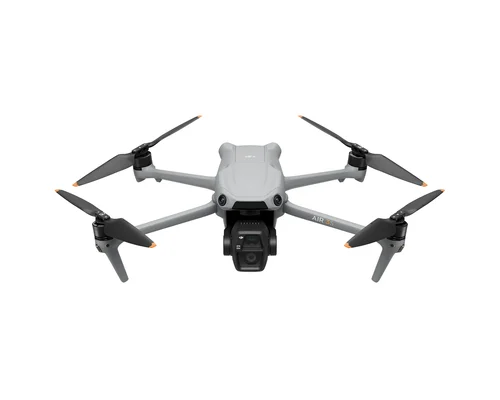
DJI Air 3S (462g): requires registration for both recreational and commercial use
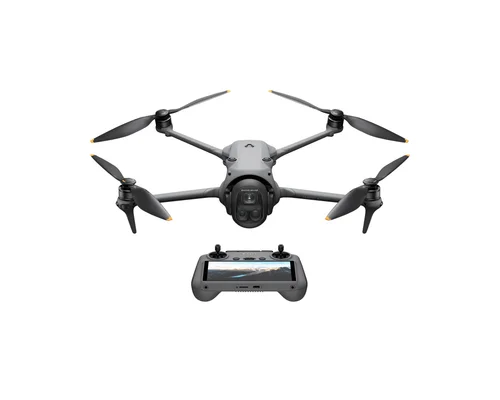
DJI Mavic 4 Pro (970g): well above the threshold, registration required
Holy Stone HS720 (470g): budget drones over 250g also require registration
Any FPV racing drone over 250g: registration required even at sanctioned club events
Drones Exempt From Recreational Registration
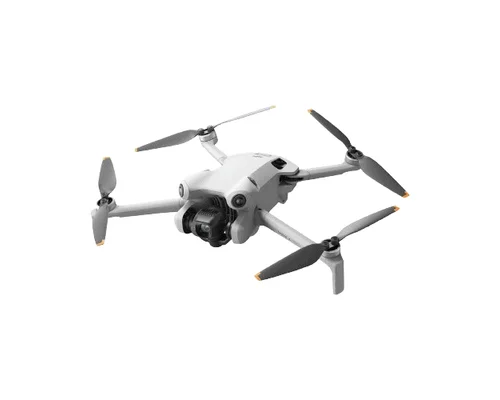
DJI Mini 4 Pro (249g): one gram below the threshold, exempt from recreational registration
DJI Mini 5 Pro (249g): same weight class, same exemption
Autel Evo Nano Plus (249g): sub-250g class, exempt recreationally
Drones flown exclusively indoors: registration applies to outdoor flight in navigable US airspace only
DJI Mini 4 Pro (249g), exempt from registrationDJI Air 3S (462g), registration required
Note: Sub-250g drones escape the registration requirement, but not other FAA rules. Recreational pilots with any drone still need to pass the TRUST safety test before flying. Most drones, including sub-250g models, must also comply with Remote ID broadcast rules. Both are covered in the sections below.
The TRUST Safety Test: Required Before Your First Recreational Flight
Most FAA registration guides skip this entirely. Before you register anything and before you fly outdoors recreationally, you must pass the Recreational UAS Safety Test (TRUST). The FAA made it mandatory in June 2021 for all recreational drone pilots in the United States.
TRUST is a free online safety course covering airspace rules, no-fly zones, weather awareness, and local regulations. It cannot be failed in the traditional sense. You work through the material, correct any wrong answers before advancing, and download a completion certificate at the end. That certificate must be carried whenever you fly recreationally, the same way you carry your registration proof.
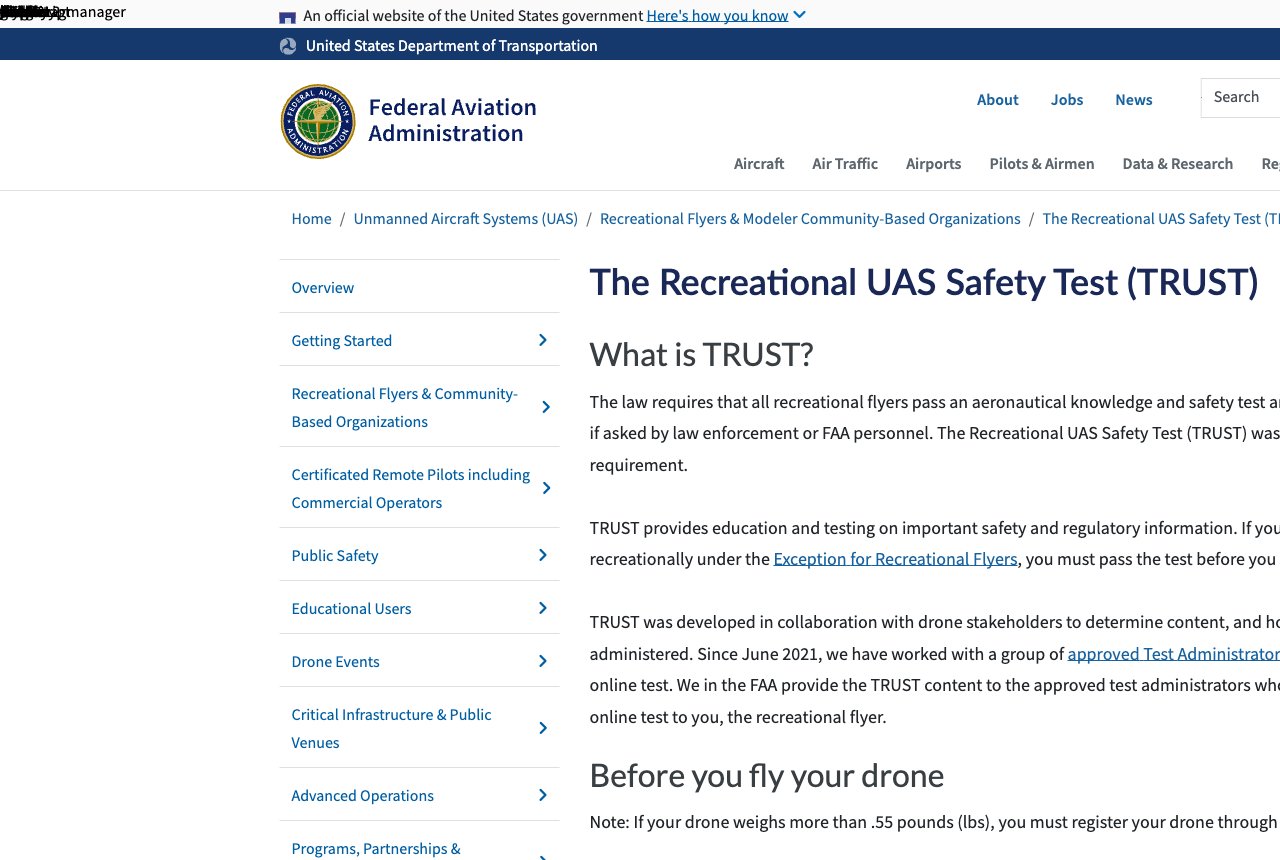
The FAA TRUST test page, start here to find an approved free test provider.
Visit the FAA's list of approved TRUST test providers. The Academy of Model Aeronautics (AMA) and the Drone Safety Alliance are both widely used options.
Create a free account on your chosen provider's site and begin the safety course.
Work through all modules at your own pace. Most pilots finish in 20 to 30 minutes.
Download your TRUST completion certificate when finished. Save it to your phone or print a hard copy.
Carry the certificate every time you fly recreationally. Law enforcement can ask to see it alongside your registration certificate.
Tip: Different approved providers format completion certificates differently. Some deliver a PDF by email; others generate a QR code you can screenshot. Both are acceptable. The certificate content matters, not the format it arrives in.
Warning: Flying recreationally without passing the TRUST test is a violation of FAA regulations, even if your drone weighs under 250g and registration is not required. The TRUST requirement applies to all recreational pilots regardless of aircraft weight.
Recreational vs. Part 107: Which Registration Path Applies to You?
FAA DroneZone has two separate registration flows. Picking the right one from the start matters. The deciding factor is whether any compensation connects to the flight.
Recreational (Hobbyist) Registration
Recreational registration applies when you fly purely for personal enjoyment. Aerial photography for your own albums, FPV racing as a hobby, and flying for friends without payment all qualify. One $5 payment covers your entire fleet for 3 years, and all recreational drones share a single FA registration number.
Part 107 (Commercial) Registration
Any drone work tied to compensation falls under commercial rules. This includes photography for paying clients, property inspection work, social media content from monetized channels, and footage sold to media outlets. Part 107 requires a Remote Pilot Certificate before you can register commercially, and each aircraft receives its own N-number at $5 per registration.
Warning: The line between recreational and commercial is stricter than most people expect. Flying footage to a monetized YouTube channel has resulted in FAA enforcement actions against pilots claiming recreational status. If compensation from a flight is even possible, treat it as commercial and get a Part 107 certificate first.
Note: Part 107 pilots can fly recreationally. When doing so, they follow recreational operating rules (TRUST requirement, community-based organization safety guidelines) rather than Part 107 rules. The purpose of each individual flight determines which rules apply, not the certificate type.
How to Register a Recreational Drone with the FAA
Recreational registration runs entirely through FAA DroneZone. You need an email address and a credit or debit card. The registration number is issued instantly after payment.
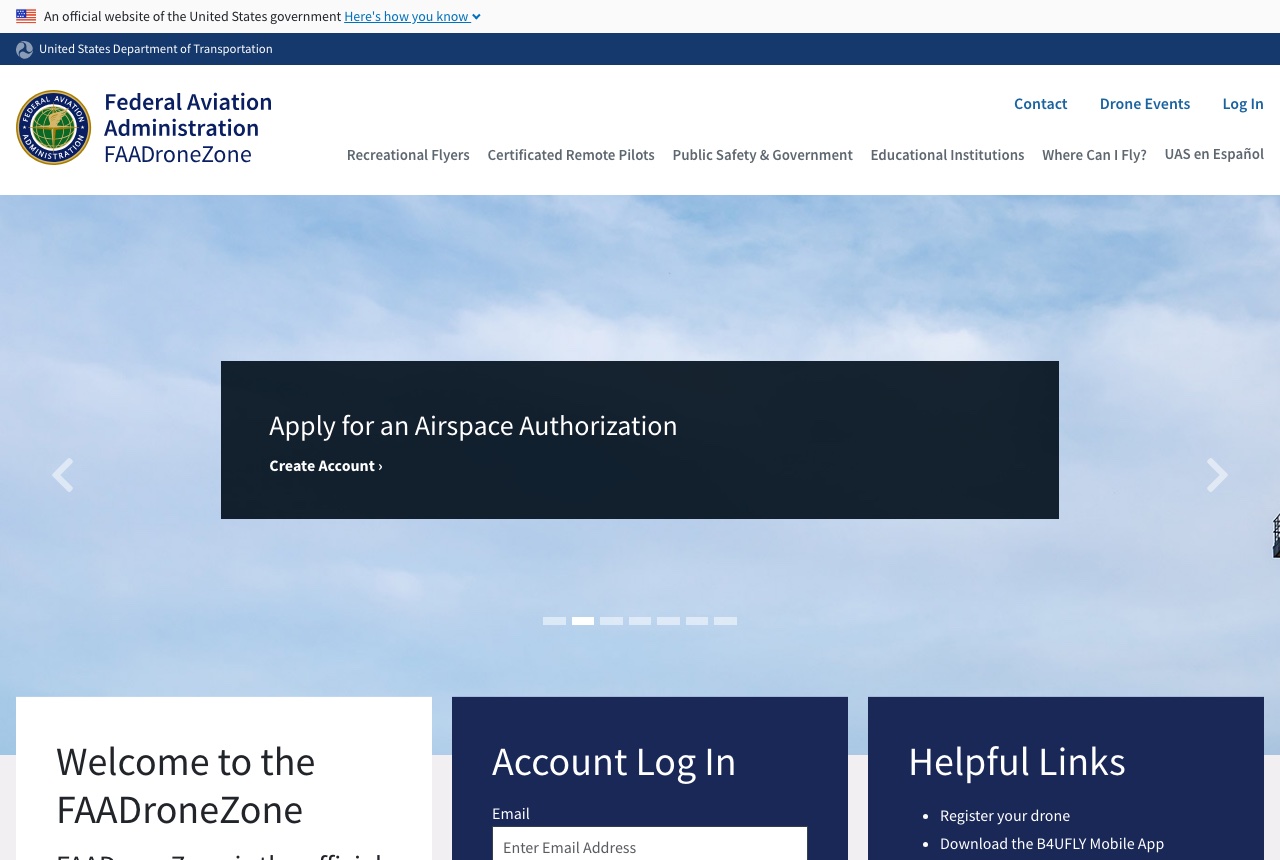
The FAADroneZone portal, create an account or log in to begin registration.
Go to faadronezone.faa.gov and click "Recreational Flyers and Community Based Organizations."
Create an FAA account or sign in with existing credentials. Verify your email address when prompted before continuing.
Click "Register a Drone" and select "Fly Under the Exception for Recreational Flyers."
Enter your drone's make and model. You can add multiple drones in this step. Each one gets covered under the same $5 payment.
Pay the $5 registration fee by credit or debit card.
Download your Certificate of Aircraft Registration. Your number starts with FA followed by digits, for example FA3X1234567.
Mark the FA number on every recreational drone you own. It must be visible without tools or disassembly.
Tip: One FA number covers your entire recreational fleet. You do not need separate numbers for each drone. Mark the same FA number on every aircraft you own.
How to Register a Drone Under Part 107
Part 107 registration requires a current Part 107 Remote Pilot Certificate. If you do not have one yet, you must pass the FAA Aeronautical Knowledge Test at an approved testing center (currently $175) before registering commercially. The test covers airspace classification, weather, radio communications, and flight operations.
Sign in to your FAA account. If your Part 107 certificate is not linked yet, click "Add Certificate" and enter your certificate number.
Click "Register a Drone" and fill in the aircraft details: make, model, and serial number. Serial number is required for all Part 107 registrations.
Pay the $5 fee. This covers one aircraft only. Register each drone you fly commercially as a separate entry.
Your aircraft receives a unique N-number (format: N followed by digits and letters, for example N12345AB). This is the drone's official FAA tail number.
Display the N-number on an external surface in letters at least 3mm tall. Engraved plates and durable adhesive labels both work. The number cannot appear inside a battery bay or behind a panel requiring tool removal.
Carry both your remote pilot certificate and the aircraft's registration certificate when flying commercially. Both can be shown as digital copies on your phone.
Note: Part 107 certificates expire every 24 months and require either a recurrent knowledge test or FAA online training to renew. Drone registrations run on a separate 3-year cycle. Track both expiration dates independently so neither catches you off guard mid-season.
Remote ID: The Other FAA Requirement You Cannot Skip
Since September 16, 2023, most drones flying outdoors in US airspace must broadcast a Remote ID signal. The broadcast transmits the drone's location, altitude, speed, direction, and takeoff point in real time. Think of it as an electronic license plate, readable by FAA systems, law enforcement, and other airspace users nearby.
Newer drones like the DJI Mavic 4 Pro include Remote ID broadcast as a built-in firmware feature.
Which Drones Need Remote ID?
Any drone that requires FAA registration also needs Remote ID compliance. The one exception is pilots flying within an FAA-Recognized Identification Area (FRIA). FRIAs are approved physical locations, typically AMA club fields, where older drones without built-in Remote ID can still be flown legally. Outside a FRIA, Remote ID compliance is mandatory for all registered drones.
Does Your Drone Already Comply?
Most DJI drones manufactured since 2021 include Remote ID as a built-in firmware feature. The Air 3S, Mavic 4 Pro, Mini 4 Pro, Mini 5 Pro, and Flip all broadcast Remote ID automatically with no additional setup. If you own an older drone that never received a Remote ID firmware update, two options are available:
Add an FAA-accepted Remote ID broadcast module: small standalone devices ($50 to $150) that attach to the drone and handle broadcasting independently of the drone's firmware
Fly exclusively within a FRIA: use the FAA FRIA locator to find approved sites near you
Warning: Disabling built-in Remote ID is illegal. Some third-party firmware modifications for DJI drones disable Remote ID as a side effect. Using modified firmware of this kind violates federal law and carries the same penalties as flying without registration.
Tip: Sub-250g drones are not exempt from Remote ID. The DJI Mini 4 Pro and Mini 5 Pro both include built-in compliance. If you are buying a new sub-250g drone, verify it supports Remote ID before purchasing.
Labeling Your Drone and Staying Compliant in the Field
Getting registered is step one. Three habits keep you covered every time you fly.
Label Your Drone Correctly
The registration number must be visible without tools or disassembly. A permanent marker on a flat section of the airframe works for most recreational pilots. Adhesive labels covered with clear tape hold up better in wet conditions. Engraved metal plates offer the most durable solution for commercial operators. For Part 107 pilots, the N-number must appear on an external surface in letters at least 3mm tall. Placing it inside a battery compartment does not meet the requirement.
Know What to Carry
Recreational flyers: TRUST completion certificate and registration certificate. Digital copies on your phone are accepted.
Part 107 pilots: Remote pilot certificate plus the specific aircraft's registration certificate. Both can be digital. Many pilots also carry a laminated physical copy of the Part 107 certificate as a backup.
Registration Renewal
FAA drone registrations expire after 3 years. DroneZone shows the expiration date on the main dashboard, and the FAA sends an email reminder before it lapses. Renewal costs the same as initial registration. Flying on an expired registration is treated the same as flying unregistered.
Note: If you sell a drone, cancel its FAA registration in the DroneZone portal before handing it over. The aircraft stays registered in your name until you cancel, which creates liability exposure if the new owner flies it before registering it themselves.
FAQ
FAA drone registration costs $5. For recreational flyers, one $5 payment covers all drones in your fleet for 3 years under a single FA registration number. For Part 107 commercial pilots, the $5 fee applies to each individual aircraft, and each receives its own N-number valid for 3 years.
No, not for recreational use. The DJI Mini 4 Pro weighs 249 grams, one gram below the FAA's 0.55 lb (250 gram) registration threshold. That said, recreational pilots still need to pass the TRUST safety test before flying, and the Mini 4 Pro must comply with Remote ID, which it does through built-in firmware.
The Recreational UAS Safety Test (TRUST) is a free online safety course that became mandatory for all US recreational drone pilots in June 2021. It covers airspace rules, no-fly zones, and safety procedures. It applies to all recreational flyers regardless of drone size or whether registration is required. You must carry proof of completion when flying.
Remote ID is an FAA requirement, active since September 2023, for most drones to broadcast their location, altitude, and speed in real time while flying outdoors. Most DJI drones manufactured since 2021 include Remote ID through built-in firmware. If your drone predates the requirement, you can add an FAA-accepted broadcast module or fly only within an FAA-Recognized Identification Area (FRIA).
Yes, for recreational flyers one $5 payment covers all drones in the account, and a single FA number can be marked on the entire fleet. For Part 107 commercial pilots, each aircraft requires a separate $5 payment and gets its own N-number, but all registrations are managed under one DroneZone account.
Flying an unregistered drone that requires FAA registration is a federal violation. Civil penalties can reach $27,500 per incident. Criminal penalties can reach $250,000 and up to 3 years imprisonment for serious cases. The FAA has issued fines to both recreational and commercial operators.
The online registration process through FAA DroneZone typically takes 5 to 10 minutes. You need an email address, your drone's make and model, and a credit or debit card. Your registration number or N-number is issued instantly after payment.
No. FAA registration applies to outdoor flight in US navigable airspace. If you fly exclusively indoors, in a warehouse, gymnasium, or your home, registration is not required regardless of the drone's weight or type.
Yes, after 3 years. DroneZone shows your expiration date on the main dashboard, and the FAA typically sends an email reminder before it lapses. Renewal costs the same as initial registration and takes just a few minutes in the portal.
Foreign visitors must follow the same FAA rules as US residents. If the drone weighs more than 250 grams, it must be registered with the FAA through DroneZone before flying outdoors. Flying commercially requires a valid Part 107 Remote Pilot Certificate. The FAA has bilateral aviation agreements with some countries that may allow certificate conversion, but this is a complex process best confirmed directly through the FAA before travel.
Marcus Webb
Staff Writer ·
Marcus has been flying drones commercially and recreationally since 2017. He holds a Part 107 certificate and has registered over a dozen aircraft with the FAA.