• Find My Drone

How to Start a Drone Light Show Business in 2026

Updated

By Paul Posea

How to Start a Drone Light Show Business in 2026 - drone reviews and comparison

What Is a Drone Light Show Business?

20+Minimum drones per show
$5K-500K+Revenue per show
1FAA waiver required

How Drone Light Shows Work

A drone light show uses a fleet of GPS-equipped drones with programmable LED lights, choreographed by software to fly in coordinated formations. Each drone acts as a pixel in a three-dimensional display. The choreography software assigns each drone a flight path and LED color sequence timed to music or narration. A single ground control station commands the entire fleet. Shows typically last 5-15 minutes and are performed after sunset for maximum visual impact.

Scale Ranges

Drone light shows operate across a wide range of fleet sizes, and the scale directly determines your investment and revenue potential:

  • Small shows (20-50 drones): Suitable for private events, weddings, corporate parties. Recognizable shapes but limited detail. Entry point for new operators.
  • Medium shows (50-150 drones): Municipal events, university celebrations, stadium halftime shows. Enough drones for detailed logos and text.
  • Large shows (150-500+ drones): Major public events, theme parks, Super Bowl-level spectacles. Complex 3D animations with high resolution. Dominated by established companies like Verge Aero and Dronisos.

Market Opportunity

The demand side is growing because of three converging trends. First, hundreds of municipalities have restricted or banned fireworks due to wildfire risk, noise complaints, and debris concerns. Drone shows fill that gap. Second, corporate event budgets increasingly favor unique, branded experiences over generic entertainment, and drone shows can display custom logos, products, and QR codes in the sky. Third, theme parks and venues are adopting permanent drone show infrastructure for nightly performances, creating recurring revenue opportunities.

Note: Consumer DJI drones cannot be used for light shows. Light show drones are purpose-built aircraft with synchronized LED systems, precision RTK GPS, and fleet management firmware that consumer drones do not have. The equipment section below covers the specific platforms available.

Drone Light Show Equipment and Software

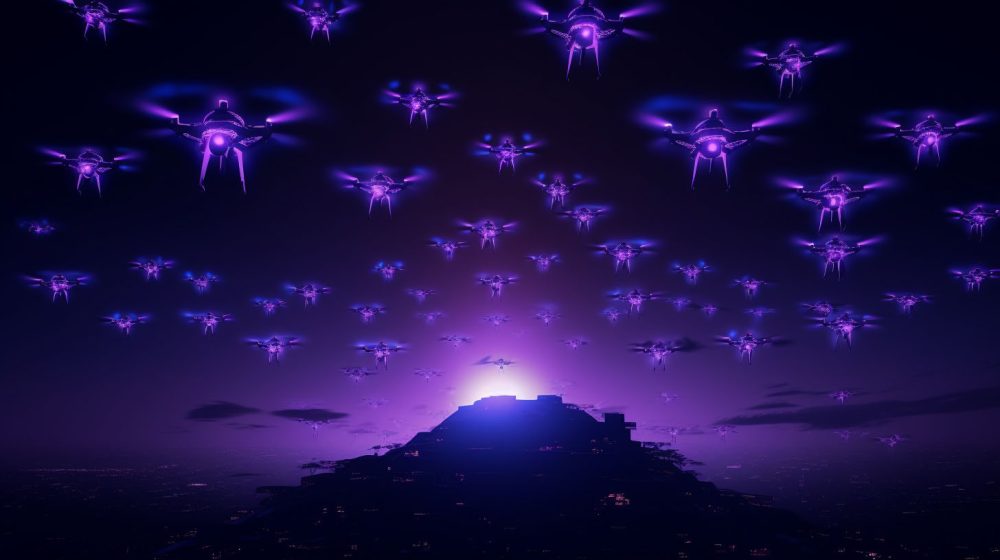
Drone light show formation 50 drones choreographed LED performance
A minimum viable show requires 20 drones; most professional shows use 100 or more

Dedicated Light Show Drone Platforms

Light show drones are specialized aircraft designed for swarm operations. They feature RTK GPS for centimeter-level positioning accuracy, high-brightness LED arrays visible from hundreds of meters, lightweight frames optimized for flight time over payload, and firmware that accepts choreography commands from a ground station. The major platforms available to new operators:

PlatformPrice Per DroneLED BrightnessFlight TimeKey Feature
Verge Aero X1$1,500-2,500High (stadium-grade)15-20 minIntegrated software + hardware ecosystem
Dronisos (proprietary)$1,000-2,000High12-18 minEuropean market leader, turnkey packages
Skybrush-compatible (Holybro X500)$500-1,000Medium (DIY LED array)10-15 minOpen-source choreography, lower entry cost
CollMot custom fleet$1,500-3,000High15-20 minEnterprise-grade, large-scale shows

Choreography and Ground Control Software

The software that designs and executes the show is as important as the drones themselves:

  • Skybrush (free/open source): The most accessible entry point. Supports Blender-based 3D animation design. Compatible with multiple drone platforms. Free choreography design tools with paid ground control server license.
  • Verge Aero Studio: Proprietary software bundled with Verge Aero hardware. Drag-and-drop animation design, built-in safety margins, automated pre-flight checks.
  • Dronisos Studio: Proprietary, integrated with Dronisos fleet. Includes client preview rendering for pre-show approvals.
  • Blender + custom plugins: Advanced operators design animations in Blender and export flight paths. Requires technical skill but offers unlimited creative flexibility.

Minimum Viable Fleet Investment

$30K-75K20-50 drone fleet
$75K-225K50-150 drone fleet
$225K+150+ drone fleet

Beyond the drones themselves, budget for spare batteries (2-3 sets per fleet), charging infrastructure (multi-port chargers capable of charging 20+ batteries simultaneously), transport cases, and a ground control station (laptop with dedicated radio link). A complete 30-drone starter fleet with Skybrush-compatible hardware runs approximately $30,000-40,000. A 50-drone Verge Aero fleet with all accessories runs $100,000-150,000.

Warning: Budget for 10-15% spare drones beyond your show count. Hardware failures happen. If your show design requires 30 drones and one fails pre-flight, you need 31-35 drones on site to guarantee the show runs as designed. Showing up to a $10,000 contract with zero margin for equipment failure is not a risk worth taking.

FAA Regulations for Drone Light Shows

Part 107 Waiver Requirements

Standard Part 107 rules prohibit flights over people (107.39) and limit operations to one pilot per drone. Both rules must be waived for light shows. The specific waivers you need:

  • 107.39 waiver (operations over people): Required for any show where spectators are within the flight area. Application includes safety analysis, emergency procedures, and proof that your drones meet the Category 3 or 4 kinetic energy thresholds for flights over people.
  • 107.35 waiver (one pilot per drone): Required to operate a swarm. You must demonstrate that your ground control system can safely manage all aircraft simultaneously and that you have a visual observer network covering the entire flight volume.
  • 107.29 waiver (night operations): Since the 2021 rule update, night operations under Part 107 are permitted with anti-collision lighting. Most light show drones exceed the minimum lighting requirements. However, you still need to document your anti-collision lighting compliance.

Airspace Authorization and NOTAMs

Every light show requires coordination with the local airspace authority. If the show is in controlled airspace (Class B, C, D, or E surface area), you need a specific airspace authorization through LAANC or a manual COA application. Even in uncontrolled airspace, you must file a NOTAM (Notice to Air Missions) alerting other aircraft to the drone activity. NOTAM filing is free through the FAA.

Local Coordination Requirements

Beyond FAA requirements, drone light shows involve local government coordination:

  • Fire marshal approval (especially in areas with fireworks restrictions)
  • Event venue insurance requirements (typically $1M-5M liability for public events)
  • Noise permits (some municipalities classify drone operations as amplified sound)
  • Road closures or restricted zones around the launch area
  • Local police or security coordination for crowd control during the show
Tip: Start the FAA waiver application process 90 days before your first show date. Waiver reviews can take 60-90 days, and there is no way to expedite them. Once you have an approved waiver, it can cover multiple shows at different locations as long as the operational parameters remain the same.

Pricing a Drone Light Show

Cost Per Drone Per Show

Pricing starts with understanding your per-show cost. Each drone incurs cost across several categories for every performance:

Cost CategoryPer Drone Per ShowNotes
Equipment depreciation$15-40Based on 200-300 show lifespan per drone
Battery cycle cost$3-8LiPo batteries degrade over 200-400 cycles
Maintenance and repairs$5-15Propeller replacement, motor servicing
LED replacement$2-5LEDs degrade; budget for periodic replacement
Labor (setup, show, teardown)$10-25Divided across fleet; includes crew of 2-4
Travel and logistics$5-20Varies with distance; trailer, fuel, hotels
Total per drone per show$40-113

Show Pricing by Fleet Size

Market pricing for drone light shows in 2026, based on fleet size and show complexity:

$5K-15KSmall (20-50 drones)
$15K-50KMedium (50-150 drones)
$50K-500K+Large (150+ drones)

Small shows at $5,000-15,000 are competitive with professional fireworks displays ($5,000-20,000 for comparable duration). The pitch to clients: drone shows are reusable (same cost whether you run it once or every weekend), produce no fire risk, generate no debris, and can display custom branding that fireworks cannot.

Subcontracting vs. Owning Your Fleet

New entrants have two paths into the market. Owning your fleet requires $30,000+ upfront but gives you full margin on every show. Subcontracting from an established company (Verge Aero and Dronisos both have partner programs) lets you book clients and provide the creative direction while the fleet owner handles equipment and logistics. Subcontractor margins are lower (you keep 20-40% of the show price) but the capital requirement drops to near zero.

A 30-drone show priced at $8,000 with a per-drone cost of $60 has a gross margin of $6,200 (77%). At 2 shows per month, annual gross revenue is $192,000 with $148,800 in gross profit before fixed overhead.

How to Land Your First Drone Light Show Contract

Drone light show business contract proposal marketing guide
Building a demo reel is the single most important step before pitching any client

Build a Demo Reel First

No client will book a $5,000+ show from a company with no portfolio. Before pursuing paying clients, you need a demo reel. Options for creating your first demonstration:

  • Run a 20-drone demo at a private location (farm, large backyard, fairground after hours) and film it from multiple angles
  • Use choreography software to create rendered preview videos showing what your shows look like (Verge Aero Studio and Skybrush both support high-quality renders)
  • Partner with a local event for a discounted or free inaugural show in exchange for filming rights and testimonials

Target Clients by Category

The highest-probability first clients for a new drone light show company, ranked by likelihood of booking:

  1. Municipal governments replacing fireworks: Many cities have already banned or restricted fireworks. Contact the parks and recreation department or events coordinator. Budget cycles are annual, so time your pitch 3-6 months before their major event (usually Fourth of July or New Year's Eve).
  2. Corporate holiday parties and product launches: Marketing departments at companies with 500+ employees often have event budgets of $50,000+. A $10,000-15,000 drone show fits within that budget as a headline entertainment piece.
  3. Universities and sports teams: Homecoming, graduation, and halftime shows are natural fits. Athletic departments and alumni offices are the contacts.
  4. Wedding and event planners: High-end weddings ($100K+ budgets) increasingly feature drone shows as the grand finale. Build relationships with luxury event planners, not couples directly.

The Fireworks Replacement Pitch

The strongest sales angle for drone light shows is the comparison to fireworks. Build your pitch around these differentiators:

FactorFireworksDrone Light Show
Fire riskSignificant (wildfires, property damage)None
Noise level120+ dB (disturbs pets, veterans, wildlife)60-70 dB (barely audible from audience distance)
Custom brandingNot possibleLogos, text, QR codes, 3D shapes
ReusabilityOne-time useSame fleet performs unlimited shows
Environmental impactChemical debris, smoke, pollutantsZero ground waste
Weather flexibilityCannot perform in rainLight rain acceptable; wind is the main limitation
Tip: Include a liability comparison in your pitch. Fireworks shows require pyrotechnic licenses, hazmat permits, and fire department standby crews. Drone shows require an FAA waiver and standard event insurance. For many municipalities, the reduced liability alone justifies the switch even before considering the creative advantages.
Note: The drone light show market is still young, and most metro areas have zero or one local provider. If you are among the first in your region, the early-mover advantage is significant. Clients currently booking from national companies (who charge travel premiums) would prefer a local operator at a lower price point.

FAQ

A minimum viable fleet of 20-30 drones using Skybrush-compatible hardware costs $30,000-40,000 including batteries, chargers, and ground control equipment. A 50-drone fleet with Verge Aero or Dronisos hardware runs $100,000-150,000. Additional costs include FAA waiver application time, insurance ($5,000-15,000/year for light show operations), transport equipment, and choreography software licensing.

The minimum for a recognizable display is 20 drones, which can form simple shapes and text. 50 drones allow for more detailed imagery and short animations. 100+ drones enable complex 3D animations, detailed logos, and multi-scene choreography. Most commercial shows use 50-200 drones. Major events like Super Bowl halftime or theme park installations use 300-1,000+.

Yes. Beyond the standard Part 107 Remote Pilot Certificate, you need FAA waivers for operations over people (107.39) and multiple-drone-per-pilot operations (107.35). You also need airspace authorization (LAANC or COA) for the specific performance location and must file a NOTAM. Local permits for the event venue, fire marshal approval, and event insurance ($1M+ liability) are also required.

Small shows with 20-50 drones cost $5,000-15,000 per performance. Medium shows with 50-150 drones cost $15,000-50,000. Large shows with 150+ drones start at $50,000 and can exceed $500,000 for major events. The per-drone cost per show (depreciation, batteries, labor, logistics) runs $40-113, so a 30-drone show has a direct cost of roughly $1,200-3,400 before fixed overhead.

No. Consumer DJI drones (Mini, Air, Mavic series) lack the synchronized LED arrays, swarm firmware, and fleet management protocols required for choreographed light shows. Light show drones are purpose-built aircraft from companies like Verge Aero, Dronisos, and CollMot, or built on open platforms like the Holybro X500 with Skybrush-compatible firmware and custom LED payloads.

Each drone carries programmable RGB LED lights and uses RTK GPS for centimeter-level positioning. Choreography software assigns every drone a unique flight path and light color sequence, timed to music. A ground control station transmits commands to all drones simultaneously via radio link. The drones fly in formation, changing position and color to create shapes, text, logos, and 3D animations in the night sky.

Yes, with high margins once the fleet investment is recovered. A 30-drone show priced at $8,000 has direct costs of roughly $1,800 (60/drone), yielding 77% gross margin. At 2-4 shows per month, annual gross revenue of $192,000-384,000 is achievable with a single fleet. The challenge is the high upfront capital ($30,000-150,000) and the 3-6 month sales cycle for booking shows with municipalities and corporations.

Paul Posea

Paul Posea

Author · Dronesgator

Paul Posea is the founder of Dronesgator and has been reviewing and comparing drones since 2015. With a Part 107 certification, 195 YouTube drone reviews, and published work on Digital Photography School, he combines hands-on flight testing with data-driven analysis to help pilots find the right drone.