• Find My Drone

Military Drones Explained: Types, Technology, and Modern Warfare

Updated

By Paul Posea

Military Drones Explained: Types, Technology, and Modern Warfare - drone reviews and comparison

Types of Military Drones and What They Do

Military drone categories from micro reconnaissance to HALE surveillance platforms
Military drones span five categories from palm-sized reconnaissance units to high-altitude surveillance aircraft
5Major drone categories
60,000 ftGlobal Hawk ceiling
11,000+U.S. military UAS fleet

MALE: Medium Altitude Long Endurance

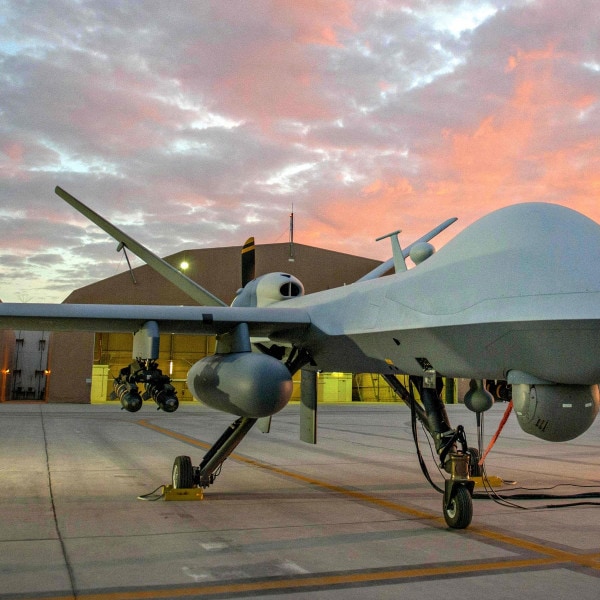
MALE drones operate at 10,000-30,000 feet for 14-27 hours. The two most well-known MALE platforms are the MQ-1 Predator (now retired) and the MQ-9 Reaper (still in active service). These are the workhorses of modern drone warfare: large enough to carry significant sensor and weapons payloads, but smaller and cheaper than manned strike aircraft. They handle both surveillance and armed strike missions, often during the same flight.

HALE: High Altitude Long Endurance

HALE drones operate above 50,000 feet for 24-36 hours. The primary HALE platform is the Northrop Grumman RQ-4 Global Hawk, used for strategic reconnaissance. At 60,000 feet, it flies above most weather and nearly all air traffic. A single Global Hawk sortie can survey 40,000 square nautical miles in a day using synthetic aperture radar and electro-optical/infrared sensors. It costs approximately $130 million per aircraft.

UCAV: Unmanned Combat Aerial Vehicles

UCAVs are purpose-built for combat, not surveillance adapted for weapons. Examples include the experimental X-47B (carrier-launched, autonomous), the Turkish Bayraktar Akinci (twin-engine, 24-hour endurance, 1,350 kg payload), and the Russian Sukhoi S-70 Okhotnik (stealth, designed to fly alongside manned Su-57 fighters). UCAVs represent the next generation of drone warfare, designed for contested airspace where MALE drones would be vulnerable to air defenses.

Loitering Munitions (Kamikaze Drones)

Loitering munitions fly to a target area, circle until a target is identified, and then dive into it and detonate. Unlike a missile, they can loiter for 15-40 minutes (or longer) and be called off if the target moves or is misidentified. The AeroVironment Switchblade 300 (anti-personnel, backpack-launched) and Switchblade 600 (anti-armor, larger warhead) are the best-known U.S. examples. Iran's Shahed-136 is a one-way attack drone used extensively in the Ukraine conflict.

Micro and Nano Drones

Small reconnaissance drones weighing under 5 pounds are used for squad-level intelligence in urban and close-combat environments. The AeroVironment RQ-11 Raven (hand-launched, 4.2 lbs) has been the U.S. military's most widely deployed small drone. The Black Hornet Nano (1.16 oz, 25-minute flight time) is a palm-sized helicopter drone carried by individual soldiers for around-the-corner reconnaissance. Over 19,000 Black Hornets have been delivered to military customers in 40+ countries.

CategoryExampleAltitudeEnduranceWeightCost
MALEMQ-9 Reaper25,000 ft27 hrs10,500 lbs$32M
HALERQ-4 Global Hawk60,000 ft32 hrs32,250 lbs$130M
UCAVBayraktar Akinci40,000 ft24 hrs13,200 lbs~$30M
LoiteringSwitchblade 600Low40 min50 lbs~$55K
MicroBlack Hornet NanoLow25 min1.16 oz~$195K/system

How Military Drones Work: Technology Explained

Satellite Uplink and Beyond-Line-of-Sight Control

Large military drones like the MQ-9 Reaper are not controlled by a joystick with direct radio contact. They use Ku-band satellite communication links that allow operators at Creech Air Force Base in Nevada to control aircraft flying over the Middle East, Africa, or anywhere else on the planet. The satellite link introduces approximately 1.5 seconds of latency. For surveillance, this delay is irrelevant. For weapons release, it means the operator must anticipate target movement and account for the lag, which is why weapons are typically released during stable target tracking, not during rapid maneuvers.

Sensor Payloads and Intelligence Gathering

Military drone sensors go far beyond visible-light cameras. Standard sensor suites include:

  • Electro-optical/infrared (EO/IR) cameras for day and night imaging
  • Synthetic aperture radar (SAR) for imaging through clouds and at night
  • Signals intelligence (SIGINT) receivers for intercepting communications
  • Multi-spectral imaging for identifying camouflage and buried objects
  • Ground-moving target indicator (GMTI) radar for tracking vehicles

The MQ-9 Reaper's MTS-B multi-spectral targeting system can identify a person from 15,000 feet and read a license plate from 10,000 feet under ideal conditions. The RQ-4 Global Hawk carries a 2,000-pound sensor payload that can image an area the size of Illinois in a single sortie.

AI-Assisted Targeting and Human-in-the-Loop

Current U.S. Department of Defense policy (DoD Directive 3000.09) requires a human operator to authorize any lethal weapons release. AI systems assist by tracking targets, classifying objects, and flagging potential threats, but the final decision to fire remains with a human. This "human-in-the-loop" requirement is a deliberate policy choice, not a technical limitation. Autonomous targeting systems exist and have been tested, but deploying them raises legal and ethical questions that have not been resolved.

Important: The distinction between "AI-assisted" and "autonomous" targeting is critical. Current policy requires human authorization for weapons release, but the speed of modern warfare is pushing militaries worldwide to consider delegating more decisions to AI systems, particularly for defending against drone swarms where human reaction time is insufficient.

GPS-Denied Navigation

Military drones cannot rely exclusively on GPS because adversaries can jam or spoof GPS signals. Backup navigation methods include inertial navigation systems (INS), terrain contour matching (TERCOM, which compares radar altitude profiles against stored maps), visual odometry (using onboard cameras to track movement relative to ground features), and celestial navigation for high-altitude platforms. Russian forces in Ukraine have demonstrated effective GPS jamming, forcing both sides to develop GPS-independent drone guidance.

The MQ-9 Reaper: The World's Most Famous Military Drone

US military MQ-1 Predator drone on airfield
The MQ-1 Predator paved the way for the larger, more capable MQ-9 Reaper
66 ftWingspan
27 hrsMax endurance
$32MCost per aircraft

Specifications and Capabilities

The MQ-9 Reaper, built by General Atomics Aeronautical Systems, is the primary armed drone in the U.S. Air Force inventory. It has a 66-foot wingspan (wider than a King Air twin-engine turboprop), a maximum takeoff weight of 10,500 pounds, and a Honeywell TPE331-10 turboprop engine producing 950 shaft horsepower. It cruises at approximately 200 mph and can fly for up to 27 hours, though typical armed missions with a full weapons load are shorter.

SpecificationValue
Wingspan66 ft (20.1 m)
Length36 ft (11 m)
Max takeoff weight10,500 lbs (4,760 kg)
Max weapons payload3,750 lbs (1,700 kg)
Service ceiling50,000 ft (15,240 m)
Max speed300 mph (482 km/h)
EngineHoneywell TPE331-10 turboprop
Typical armament4x Hellfire missiles + 2x GBU-12 Paveway bombs

How a Reaper Mission Works

A Reaper mission requires a crew of two: a pilot who controls the aircraft and a sensor operator who manages the cameras and targeting systems. Both sit in a ground control station (GCS), typically at Creech AFB in Nevada or a forward operating base. A local launch and recovery team handles takeoff and landing at the overseas airfield where the Reaper is based. Once airborne, satellite control is handed off to the remote crew, who may fly the aircraft for the next 12-20 hours.

The crew can switch between surveillance and strike modes during a single sortie. A common mission profile involves hours of surveillance followed by a weapons release if a pre-approved target is positively identified. The 1.5-second satellite lag means the sensor operator must hold stable tracking on the target for several seconds before and after weapons release to confirm the hit.

Who Operates the Reaper

The U.S. Air Force is the primary operator, with squadrons at Creech AFB (Nevada), Holloman AFB (New Mexico), and several forward bases. The U.K. Royal Air Force operates Reapers from RAF Waddington. France, Italy, the Netherlands, and Spain also operate or have ordered MQ-9 variants. General Atomics has delivered over 360 Reapers worldwide. The U.S. Air Force plans to begin retiring the MQ-9 in the early 2030s, replacing it with the MQ-Next program (details still classified).

Note: Despite its "unmanned" designation, each Reaper mission involves dozens of people: pilots, sensor operators, intelligence analysts, maintenance crews, and mission coordinators. A single Reaper combat air patrol requires roughly 180 personnel to sustain on a 24/7 basis.

Loitering Munitions and the Ukraine Drone War

$6KSwitchblade 300 unit cost
$20K-50KShahed-136 estimated cost
$500Modified FPV drone cost

How Loitering Munitions Work

A loitering munition is launched toward a target area (not a specific target). Once in the area, it circles autonomously or under operator control, using onboard cameras to search for targets. When a target is identified and confirmed, the operator commands the munition to dive into it and detonate its warhead. If no valid target appears, some loitering munitions can return to a recovery point. Others have a self-destruct timer. The key advantage over a traditional missile is the ability to wait, search, and retarget in real time.

The Bayraktar TB2 in Ukraine

The Turkish-made Bayraktar TB2 became famous in the first weeks of the 2022 Russian invasion of Ukraine. Ukrainian forces used TB2s to destroy Russian supply convoys, armored vehicles, and surface-to-air missile systems, publishing dramatic thermal footage on social media. The TB2 is a MALE-class drone (not a loitering munition) carrying MAM-L smart munitions, with a 27-hour endurance and a cost of approximately $5 million per unit. Its early success made "Bayraktar" a household word in Ukraine, inspiring a popular song.

However, as Russia deployed more advanced air defenses and electronic warfare systems, TB2 effectiveness declined significantly. By mid-2022, TB2 losses mounted and the drone shifted primarily to reconnaissance roles rather than strike missions. This demonstrated a critical lesson: even effective drones become vulnerable once the adversary adapts its air defense network.

Modified Commercial Drones on the Battlefield

Both Ukrainian and Russian forces extensively use modified commercial drones, primarily DJI Mavic series quadcopters, as improvised weapons platforms. Soldiers attach grenades, mortar rounds, or custom-made munitions to consumer drones costing $500-2,000 and drop them on enemy positions. First-person-view (FPV) racing drones, modified with explosive warheads, are used as precision-guided kamikaze weapons against individual vehicles and fortified positions. The cost per strike is a tiny fraction of a guided missile.

The Ukraine conflict proved that a $500 FPV drone carrying a modified grenade can destroy a $3 million armored vehicle, fundamentally changing the cost calculus of modern warfare.

The Shahed-136 Campaign

Russia has launched hundreds of Iranian-designed Shahed-136 (designated Geran-2 by Russia) one-way attack drones against Ukrainian cities and infrastructure. These are not precision weapons. With a 40 kg warhead and GPS/inertial guidance, the Shahed-136 has a range of approximately 2,500 km. They cost an estimated $20,000-50,000 each, making them far cheaper than cruise missiles ($1-2 million each). Ukraine intercepts many of them using air defenses, but the sheer volume strains defensive resources. The strategy relies on overwhelming defenses through numbers rather than individual precision.

Consumer Drones vs. Military Drones: How Different Are They?

Scale Comparison

SpecificationDJI Mini 4 ProMQ-9 Reaper
Weight249g (0.55 lbs)4,760 kg (10,500 lbs)
Wingspan/diagonal31.5 cm20.1 m (66 ft)
Flight time34 min27 hours
Range20 km (radio)1,852 km (satellite)
Max altitude120 m (legally)15,240 m (50,000 ft)
PayloadNone1,700 kg (3,750 lbs)
Cost$759$32,000,000
Crew1 person180+ personnel (24/7 ops)

What Military Drones Have That Consumer Drones Lack

  • Encrypted, jam-resistant satellite communication links
  • Multi-spectral sensor suites (IR, SAR, SIGINT)
  • Hardened avionics designed to operate in GPS-denied, EW-contested environments
  • Redundant flight control systems (triple-redundant in most platforms)
  • Weapons integration with precision-guided munitions
  • IFF (Identify Friend or Foe) transponders
  • Anti-tamper hardware that prevents reverse engineering if captured

What Consumer Drones Do That Surprised Military Planners

The Ukraine conflict revealed that cheap, commercially available drones are effective weapons platforms because of three factors military planners did not fully anticipate. First, they are cheap enough to use in huge numbers. Losing 50 DJI Mavics in a week costs $50,000, less than one guided missile. Second, they are small and fly low, making them difficult to detect with radar systems designed to track larger aircraft at higher altitudes. Third, they are available globally with no export controls. Anyone can buy a DJI drone online.

This does not mean a consumer drone is a serious weapon in a conventional sense. A DJI Mini 4 Pro cannot threaten a fighter jet or damage hardened military infrastructure. But hundreds of modified consumer drones used as disposable reconnaissance and strike platforms can shape a battlefield in ways that military planners are still adapting to counter.

Tip: If you are interested in how consumer drone technology compares at the hobbyist level, our best drones for beginners guide covers what modern sub-250g drones can actually do, which is far more than most people expect.

FAQ

The Northrop Grumman RQ-4 Global Hawk is the most capable reconnaissance drone, flying at 60,000 feet for 32 hours. For combat missions, the MQ-9 Reaper remains the most widely deployed armed drone. Next-generation programs like the U.S. Air Force's MQ-Next and the Navy's MQ-25 Stingray (carrier-based refueling drone) represent the cutting edge, but most details remain classified.

The RQ-4 Global Hawk has a range of approximately 14,000 nautical miles (26,000 km) and can fly for over 32 hours. The MQ-9 Reaper has a range of about 1,150 nautical miles (2,130 km). Loitering munitions have much shorter ranges: the Switchblade 300 has a range of about 10 km, while the Iranian Shahed-136 has a range of approximately 2,500 km.

Yes. Military drones are regularly shot down or disabled by surface-to-air missiles, electronic warfare (jamming and GPS spoofing), and even small arms fire at low altitudes. In the Ukraine conflict, both sides have lost numerous drones to air defenses. The Bayraktar TB2's effectiveness declined significantly once Russia deployed layered air defense and electronic warfare systems.

Costs vary enormously by type. A Switchblade 300 loitering munition costs about $6,000. An MQ-9 Reaper costs approximately $32 million. An RQ-4 Global Hawk costs about $130 million. The Black Hornet Nano micro-drone system costs roughly $195,000. Modified commercial FPV drones used in Ukraine cost $500-2,000 each.

Military drones are controlled by human pilots, just not from inside the aircraft. An MQ-9 Reaper is operated by a two-person crew (pilot and sensor operator) sitting in a ground control station, often thousands of miles from the drone. Sustaining one Reaper on continuous 24/7 operations requires approximately 180 personnel including pilots, sensor operators, analysts, and maintenance crews.

Current U.S. military drones are not autonomous in the weapons-release sense. DoD Directive 3000.09 requires a human to authorize lethal force. AI systems assist with target tracking, classification, and navigation, but the final decision to fire is made by a human operator. Some loitering munitions have semi-autonomous target recognition, but a human still confirms the engagement in most Western systems.

A loitering munition (sometimes called a kamikaze drone or suicide drone) is a weapon that flies to a target area, circles while searching for targets, and then dives into the target and detonates. Unlike a missile, it can wait, search, and be redirected in real time. Examples include the AeroVironment Switchblade 300/600 and the Iranian Shahed-136.

In the Ukraine conflict, both sides use commercial DJI quadcopters for reconnaissance, artillery spotting, and as improvised weapons platforms by attaching grenades or explosives. Modified FPV racing drones serve as precision-guided kamikaze weapons against vehicles and positions. A $500 FPV drone with a modified warhead can destroy armored vehicles costing millions, fundamentally changing the economics of ground combat.

Paul Posea

Paul Posea

Author · Dronesgator

Paul Posea is the founder of Dronesgator and has been reviewing and comparing drones since 2015. With a Part 107 certification, 195 YouTube drone reviews, and published work on Digital Photography School, he combines hands-on flight testing with data-driven analysis to help pilots find the right drone.