• Find My Drone

Drone Fell in Water: Emergency Recovery Steps and What to Do Next

Updated

By Paul Posea

Drone Fell in Water: Emergency Recovery Steps and What to Do Next - drone reviews and comparison

What to Do Immediately After a Drone Falls in Water

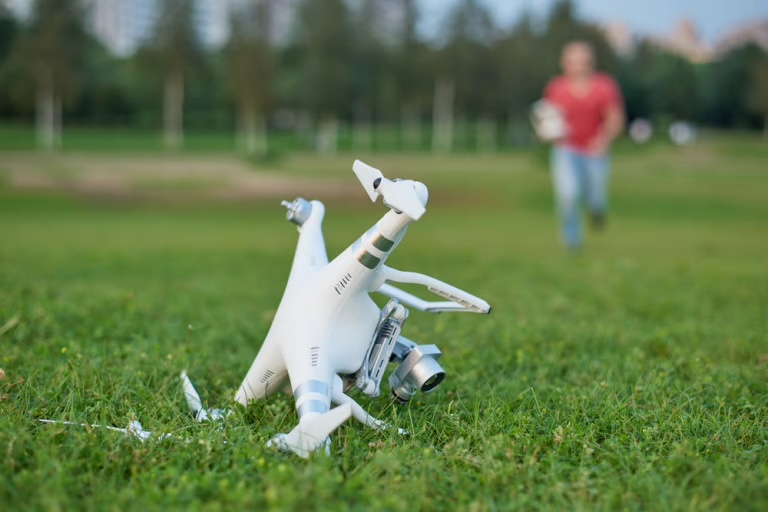
Drone retrieved after falling in water
The first 30 minutes after water exposure are the critical window. Battery out, power off, no testing. Every additional minute with current flowing through wet circuits increases the damage.

The DJI Care Refresh Decision: Step One

Before touching anything else, check whether the drone is covered by DJI Care Refresh. DJI Care Refresh explicitly covers water damage and counts a drone lost in water as a flyaway incident. If your plan is active: do not attempt to dry or disassemble the drone yourself. Download the flight log from DJI Fly immediately (Profile, Flight Records) while the app is still connected over WiFi, because DJI may require it for the claim. Then contact DJI support to initiate the replacement process.

If you do not have DJI Care Refresh, or if the plan has lapsed, proceed with the recovery steps below. Third-party drone insurance through SkyWatch or Verifly may also cover accidental water damage, so check your policy before assuming you have no coverage.

Emergency Recovery Procedure

  1. Retrieve the drone immediately. Every additional second submerged increases water penetration into board layers and motor windings.
  2. Do NOT power it on. Do not press any buttons, do not plug in a charger, do not connect via USB.
  3. Remove the battery immediately. This breaks the circuit and stops current from flowing through wet components.
  4. Remove any SD card and SIM card. These can often be recovered even if the drone is not.
  5. Open the drone as much as possible to allow airflow. Remove any accessible panels to expose the main board to air.
  6. For saltwater or pool water: rinse all electronics with distilled water (not tap water) before drying to displace salt or chlorine deposits. Distilled water contains no ions of its own and will not conduct electricity.
Warning: Do not use a hair dryer or heat gun. Excess heat warps plastic housings, can melt solder joints on fine-pitch components around the IMU and ESCs, and drives moisture deeper into board layers rather than extracting it.

The Battery Decision

A LiPo battery that was submerged is suspect even if it appears undamaged. Inspect it carefully for swelling, deformation, or electrolyte smell after drying. A swollen LiPo must be safely discharged and disposed of at a battery recycling drop-off (Best Buy, Home Depot, Lowe's). Do not charge a battery that has been submerged without a thorough visual inspection first. Even a battery that looks fine may have internally compromised cells that will fail or swell under charge load.

Saltwater vs. Freshwater: Why the Difference Matters

30 mincritical recovery window
3-5xsaltwater corrosion vs. freshwater
24-72 hrsminimum drying before power-on

Why Saltwater Is Significantly Worse

Freshwater is non-conductive when pure. The real danger in lake or river water is dissolved minerals and organic matter, not the water itself. Clean freshwater addressed quickly is relatively forgiving. Saltwater is a different situation entirely. Sodium chloride dissociates into ions in water, making it highly conductive. It causes galvanic corrosion on aluminum frames, motor bearings, ESC traces, and circuit board contacts within hours. Saltwater incidents are roughly 3 to 5 times more damaging than freshwater in equivalent exposure time.

Pool water falls between the two: no salt, but chlorine is corrosive to metal contacts and copper traces. Treat a pool dunking more seriously than a pond dunking but less urgently than an ocean crash.

Freshwater: Act Quickly, Skip the Distilled Rinse

For a drone that fell into a lake, river, or pool and was retrieved within a few minutes: remove the battery, let the drone drip dry briefly, then proceed directly to the 99% IPA cleaning method below. Do not rinse with tap water, which contains calcium, magnesium, and chlorine of its own.

Saltwater: Distilled Water Rinse Is Not Optional

For ocean or estuary water: rinse the electronics immediately with distilled water to displace salt before it dries and deposits on traces. This step must happen before drying. Salt crystals that form on circuit board traces as water evaporates are highly corrosive and will continue dissolving copper even without standing water present. If you do not have distilled water immediately on hand, collect the drone in a sealed bag with any water it was in (to prevent salt from drying) and get distilled water as fast as possible.

How to Dry and Clean a Water-Damaged Drone

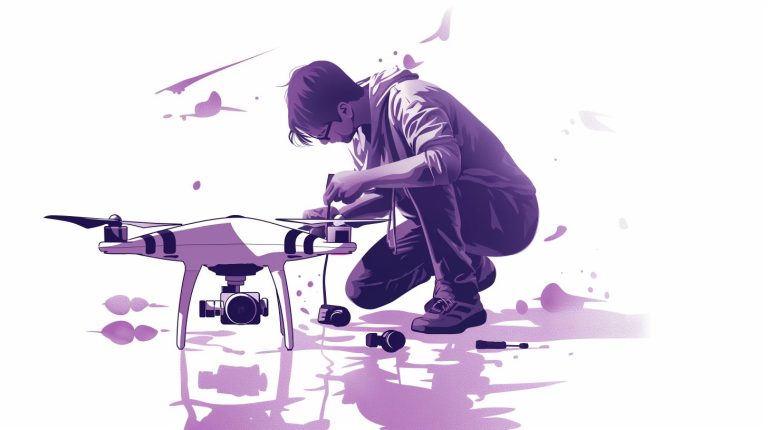
Assessing water damage repair options for a drone
After the distilled water rinse (if needed for salt), 99% isopropyl alcohol displaces remaining moisture and evaporates cleanly without leaving conductive residue. Rice does neither of these things.

Why Rice Does Not Work

Rice is the most widely repeated water damage myth. It absorbs a small amount of ambient humidity but cannot extract water that has already wicked into board layers or motor windings. It takes 48 to 72 hours for minimal effect. Rice starch can also deposit fine particles inside the drone's ports and ventilation paths. Electronics repair professionals universally advise against it.

Silica gel packets are better than rice (they absorb moisture more effectively) but share the same limitation: passive absorption only. They cannot remove water that has already penetrated components.

The 99% Isopropyl Alcohol Method

The electronics repair community standard for water damage is 99% isopropyl alcohol (IPA). IPA displaces water on a molecular level, carries it away from component surfaces, and evaporates completely without leaving conductive residue. The percentage matters: 70% or 91% IPA still contains water and can reintroduce moisture to surfaces you are trying to dry. Use 99% only.

  1. If comfortable doing so, disassemble the drone to expose the main flight controller board.
  2. Rinse with distilled water first if saltwater exposure occurred.
  3. Submerge or thoroughly swirl the main board in 99% IPA for 15 to 30 seconds, agitating gently.
  4. Allow to drip dry on a clean paper towel or lint-free cloth in a warm (not hot), dry area with good airflow.
  5. Allow 24 to 72 hours before attempting to power on. 72 hours is the conservative recommendation; 24 hours is the absolute minimum.
Note: Even if the drone powers on and flies normally after drying, mineral deposits remaining on board traces continue to corrode copper over weeks. A drone that appears fine after recovery can fail weeks later. If you skipped the IPA cleaning step, consider having the board professionally cleaned before trusting the drone over water or in conditions where a failure is costly.

Component Triage: What Is Likely to Survive a Drone Water Dunking

Motors: Resilient but Check the Bearings

Brushless motors are relatively resilient to water. The open stator windings allow water to pass through during submersion. The immediate risk is winding short if powered while wet. The long-term risk is bearing corrosion, which often appears weeks after the incident rather than immediately. After thorough drying, spin each motor by hand: it should spin freely with no grinding or resistance. Any motor that feels gritty or catches needs either bearing replacement or motor replacement.

Motor failures from a water incident often present as increased heat during flight, vibration, or gradual loss of power over several flights rather than immediate failure. Monitor closely for the first several flights after recovery.

ESCs, Flight Controller, and Gimbal

Electronic Speed Controllers (ESCs) have thin circuit board traces that are vulnerable to salt deposits and corrosion bridges. Visual inspection for burnt spots, discoloration, or white mineral deposits on the traces is important before first power-on after drying.

The flight controller (main board) is the most critical and most sensitive component. Corrosion on BGA solder joints under chips cannot be seen without magnification. If the drone boots but behaves erratically (random errors, inconsistent GPS, attitude hold failures), suspect delayed flight controller corrosion.

Gimbal flex cables are highly vulnerable. The flat ribbon cable connecting the gimbal to the main board often develops corrosion at its connector pins after a water incident. If gimbal errors appear after a water recovery, the ribbon cable is the first thing to replace before more expensive repairs.

The Latent Failure Risk

The most dangerous outcome of water damage recovery is the drone that boots and flies fine immediately afterward. Pilots assume it is recovered and return to normal use over water or in complex environments. Latent corrosion from mineral deposits then causes a failure at the worst possible moment. If you recovered a drone from water and did not complete a thorough cleaning with 99% IPA, treat the next several flights as test flights in a safe open area rather than resuming high-risk operations.

DJI Care Refresh Coverage and Preventing Drone Water Incidents

DJI Care Refresh and drone insurance for water damage
DJI Care Refresh explicitly covers water damage and counts an unrecoverable drone lost in water as a flyaway incident. Check your plan status before attempting any DIY repair.

What DJI Care Refresh Covers

DJI Care Refresh covers accidental water damage for all plans. An unrecoverable drone that sank in a lake or ocean counts as a flyaway incident and is covered under the flyaway replacement tier. The 1-year plan includes 2 replacements; the 2-year plan includes 4 replacements. A per-incident fee applies (significantly less than full drone cost). For current US availability of DJI Care Refresh, check DJI's website directly as US import regulations have affected new plan availability on some models.

Do NOT attempt DIY repair before contacting DJI if you have an active Care Refresh plan. Disassembly voids the replacement claim. Your flight log is required for the claim, so export it from DJI Fly before the drone powers down permanently.

Third-Party Insurance Options

Several third-party insurers cover drone water damage. SkyWatch.AI and Verifly both offer pay-per-flight policies that include accidental damage coverage. Some homeowner's and renter's insurance policies cover portable electronics including drones. Check whether your existing policy has drone coverage before purchasing a separate plan.

Preventing Future Water Incidents

  • Set return-to-home (RTH) altitude above all obstacles between you and the launch point before every water flight
  • Enable low-battery RTH warning at 30% (not the default 20%) when flying over water with no recovery option below
  • Use a landing pad on the shore so the drone has a reliable flat hard surface to return to
  • Practice RTH in open land before flying the drone over water for the first time
  • Avoid flying over water in winds above your drone's rated resistance level (Level 5 for Mini 4 Pro, Level 6 for Air 3S)
  • DJI waterproof drones (SwellPro Fisherman, HoverAir Aqua) are the right tool for regular water operations; standard DJI consumer drones have no water protection

FAQ

Retrieve it immediately, do not power it on, and remove the battery right away. Powering on wet electronics causes short circuits that destroy components. For saltwater: rinse with distilled water to displace salt. Then dry thoroughly with 99% isopropyl alcohol and wait 24 to 72 hours before attempting to power on. If you have DJI Care Refresh, contact DJI before any DIY repair, as disassembly can void the replacement claim.

Yes, in many cases, if the battery was removed quickly and the electronics were cleaned and dried properly. Freshwater incidents with a fast response and thorough 99% IPA cleaning have a good recovery rate. Saltwater incidents are more damaging due to corrosion but are still recoverable if a distilled water rinse followed by IPA cleaning is completed before the salt dries. Motors often survive. Flight controller and ESC corrosion is the most common cause of non-recovery.

Yes. DJI Care Refresh explicitly covers accidental water damage. A drone that crashed into water and is unrecoverable is treated as a flyaway incident and covered under the flyaway replacement tier. Export your flight log from DJI Fly before the drone shuts down permanently, as DJI requires it for the claim. Do not attempt DIY repair before contacting DJI, as disassembly can void the claim.

No. Rice absorbs very little moisture and takes too long to help. It cannot remove water that has already wicked into circuit board layers or motor windings. Rice starch can also deposit particles inside the drone. The correct approach is 99% isopropyl alcohol, which displaces water on a molecular level and evaporates completely. 70% or 91% IPA still contains water and is not an adequate substitute.

Saltwater is significantly worse. Sodium chloride dissociates into ions in water, making it highly conductive and aggressively corrosive to aluminum frames, motor bearings, ESC traces, and circuit board contacts. Salt-induced corrosion can begin within hours of exposure. Freshwater damage is primarily from minerals and organic matter; clean lake or river water addressed quickly is relatively forgiving. Always rinse a saltwater-exposed drone with distilled water before drying.

At minimum 24 hours after the drone appears completely dry. 72 hours is the conservative recommendation. Drying time depends on how deeply water penetrated and whether 99% IPA cleaning was used (which speeds drying significantly). Even after the drone appears dry on the surface, moisture can remain in motor windings and board layer vias. Powering on before the drone is fully dry risks a short circuit on a component that the initial water exposure did not damage.

Often yes, because brushless motors have open stator windings that allow water to pass through. The immediate risk is a winding short if the motor is powered while wet, which is why removing the battery first is critical. The long-term risk is bearing corrosion, which may not appear until weeks after the incident. After drying, spin each motor by hand: smooth and free with no grinding means the bearings are intact. Grinding or resistance means the bearings need replacement.

Paul Posea

Paul Posea

Author · Dronesgator

Paul Posea is the founder of Dronesgator and has been reviewing and comparing drones since 2015. With a Part 107 certification, 195 YouTube drone reviews, and published work on Digital Photography School, he combines hands-on flight testing with data-driven analysis to help pilots find the right drone.