• Find My Drone

Antigravity A1 vs DJI Avata 360

Specs, camera quality, and ratings compared · Updated 2026

Antigravity A1
$1279·
4.3/5
Buy NowFull analysis
VS
DJI Avata 360
$719·
4.5/5
Buy NowFull analysis
Antigravity A14.3/5
4.5/5DJI Avata 360
4.3
4.6
3.9
4.2
4.4
4.5
4.6
4.4
4.7
3.6
3.8
4.4

For a few months the Antigravity A1 had the 360 drone category to itself. Then DJI launched the Avata 360 in March 2026, and the obvious question followed: which of the world's first two 8K 360 drones should you actually buy?

They take opposite approaches. The A1 chases the lightest, most travel-friendly design and slips under the 250g registration line.

The Avata 360 leans on DJI's imaging muscle for sharper footage, a lower entry price, and the freedom to fly with or without goggles.

Short version: the A1 wins on weight and freedom, the Avata 360 wins on image quality and value. Use the picker below to get a personal recommendation, then read on for the detail.

Which one is right for you?
Do you want to avoid drone registration?
What matters most to you?
How do you want to fly it?
Do you already own DJI gear?
Your best matchAntigravity A1Lightest, license-free 360from $1,279
  • 249g on the standard battery, so no FAA or EU registration
  • Foldable and pocketable, the easier drone to travel with
  • A fully immersive, goggle-first flying experience
See the A1Runner-up: DJI Avata 360

Watch: The A1 vs Avata 360 Head-to-Head

Pros & Cons

Antigravity A1

Pros
  • World's first 8K 360 drone. Two lenses capture everything around the drone at once, so you frame the shot afterward instead of nailing it mid-flight.
  • Just 249g and foldable. With the standard battery it slips under the 250g line and packs down small enough for any bag.
  • Immersive goggle flight. The bundled Vision Goggles (dual 2560x2560 micro-OLED) with head tracking make flying feel like you are onboard.
  • Reframe any angle after landing. Pull forward, reverse, side-tracking, or orbit shots out of a single pass in the Antigravity app.
  • Genuinely quiet. Reviewers report it is barely audible from 150 to 200 meters away, unusual for a drone this capable.
  • Insta360 imaging pedigree. The 360 capture and stabilization lean on Insta360's proven action-cam engineering.
Cons
  • "8K" is the full-sphere number. Reframed to a normal shot the usable resolution is closer to 2.7K, and the live goggle feed maxes at 2K.
  • The goggles are mandatory. There is no screen-only flying at launch, so you effectively need a spotter to stay legal and safe.
  • The high-capacity battery crosses 250g. It reaches about 291g, which triggers FAA and EU registration and forfeits the sub-250g advantage.
  • App and firmware friction. Owners report large updates, connection drops, and occasional export crashes in the beta editing app.
  • Obstacle avoidance is limited. It is effectively front and downward only, active in the calmer flight modes, not a true 360 safety net.
  • No manual or acro mode yet. A conventional stick controller was still pending at launch, so freestyle pilots are out of luck.

DJI Avata 360

Pros
  • The world's second 8K 360 drone, and the sharper one. Dual 1/1.1-inch 64MP sensors and 8K60 capture out-resolve the Antigravity A1 in side-by-side footage.
  • Fly it with or without goggles. Works as an immersive FPV drone with the Goggles 3, or as a normal tracking drone with the RC 2 screen controller.
  • Lower entry price. Starts at $479 drone-only (or $719 with the RC 2), well under the A1's all-in bundles.
  • DJI's O4+ transmission. A 20 km FCC range and rock-solid 1080p feed that outclasses most rivals.
  • Full DJI ecosystem. Works with existing DJI goggles, controllers, batteries, and the mature DJI editing apps.
  • 10-bit D-Log M color. More grading latitude for creators who finish their footage in post.
Cons
  • 455g, so registration is mandatory. Nearly double the A1's weight, which places it in EU C1 and requires FAA registration everywhere.
  • Not foldable or pocketable. The ducted-prop FPV body is bulkier and less travel-friendly than a sub-250g folder.
  • Goggles and controller cost extra. The $479 sticker is drone-only, so a usable kit lands closer to $719 or more.
  • No manual acro at launch for 360 mode. The 360 capture leans on self-leveling flight rather than full freestyle.
  • Shorter real-world flight. Around 18 minutes in practice against the rated 23.

Price Range

Budget
Mid
Enthus.
Prem.
Pro
Antigravity A1$1279
DJI Avata 360$719

Headline prices mislead here, so compare what you actually pay to fly. The A1's Standard bundle is $1,279 but already includes the Vision Goggles and the Grip controller.

The Avata 360 starts at $479 drone-only (often out of stock) and about $719 with the RC 2 screen controller, with goggles sold separately.

Add a comparable immersive kit to the DJI and the two get closer, but the Avata 360 still lands cheaper. For most buyers it is the better value. The A1 earns its premium only if its 249g weight and all-in-one simplicity are worth it to you.

Specs Comparison

Swipe to see all columns →

Side-by-side specification comparison of Antigravity A1 and DJI Avata 360
Antigravity A1 - 8K 360 Drone
Antigravity A1
DJI Avata 360 - 8K 360 / FPV Drone
DJI Avata 360
4.3
4.5
Camera & Imaging
Camera8K at 30fps8K at 60fps
Sensor SizeDual 1/1.28-inchDual 1/1.1-inch
Aperturef/2.2f/1.9
HDR
RAW/DNG
Flight Performance
Flight Time24 minutes23 minutes
Range10 km20 km
Max Speed16 m/s18 m/s
Gimbal360 digital stabilization360 digital stabilization
Smart Features
Obstacle Avoidance
GPS
Follow Me
Return to Home
Build & Design
Price$1279$719
Weight249g455g
Foldable
Buy NowBuy Now

2, and 8K30. Reviewers who flew both give the Avata 360 the edge in sharpness, low light, and grading latitude, especially once you crop a normal shot out of the sphere.

The other big split is control. The A1 is goggles-first: it ships with its Vision Goggles and you fly through the headset, so you need a visual observer.

The Avata 360 flies immersively with the DJI Goggles 3, or as a normal tracking drone on the RC 2 screen with no headset at all. For pilots who find goggles disorienting, that flexibility matters.

Buy the Antigravity A1 if you want the lightest 360 drone, you value flying registration-free, and you travel a lot.

Buy the DJI Avata 360 if you want the sharpest 360 footage, the lower entry price, the option to fly without goggles, or you are already invested in DJI gear.

Weight and Drone Laws: The 250g Difference That Changes Everything

This is the single biggest real-world difference between the two, and most comparisons barely mention it. The A1 on its standard battery weighs 249g. The Avata 360 weighs 455g. That gap decides what the law asks of you.

What the law requiresAntigravity A1 (249g)DJI Avata 360 (455g)
US: FAA registrationNot required (recreational, standard battery)Required ($5)
US: Remote IDNot required under 250g (recreational)Required
EU: drone classC0 (lightest open category)C1 (registration + more limits)
UK: registrationOperator ID sensible, fewer limitsOperator ID required
The A1's hidden catch: the optional high-capacity battery pushes the A1 to about 291g, which crosses the 250g line and puts it in the same registration bucket as the Avata 360. The sub-250g advantage only holds on the standard battery.
Note: rules vary by country and change often. Check your national aviation authority, and use our drone laws checker before you fly.

If flying without paperwork and staying under weight limits matters to you, the A1 sits in a friendlier legal category than the Avata 360. If you are going to register a drone anyway, this difference disappears.
What About the DJI Mini 5 Pro?

Plenty of buyers cross-shopping these two are really asking a bigger question: do I even need a 360 drone? If you mostly want beautiful, sharp, traditional aerial footage, a gimbal drone like the DJI Mini 5 Pro will out-shoot both of these for image quality, and it is also sub-250g.

The 360 drones win when you want the reframe-later workflow, immersive goggle flight, or shots you could never line up in the moment. If none of that excites you, the money is better spent on a classic camera drone. If it does, the choice comes back to the A1 versus the Avata 360.

Head-to-Head Spec Matrix

The curated winner view: the orange cell takes each row.

Head to headSub-250gAntigravity A1from $1,279DJI Avata 360from $719
Weight249g455g
Sub-250g, no registrationYes (standard battery)No
360 resolution8K308K60
Camera sensorsDual 1/1.28"Dual 1/1.1" 64MP
Aperturef/2.2f/1.9
Color / gradingStandard10-bit D-Log M
Fly without gogglesNoYes
Foldable / portableYesNo
Flight time (rated)24 min (39 high-cap)23 min
Transmission range10 km (real ~2 km)20 km O4+
Entry priceThe A1's bundle includes goggles + controller; the Avata 360's $719 is with the RC 2 screen controller, goggles extra.from $1,279from $719
Best forTravel, license-free 360Sharpest 360, DJI ecosystem
Rows won47

Both are true 8K 360 drones. The A1 wins on weight and registration-free flight; the Avata 360 wins on image quality, flexibility, and price. Prices shift with sales.

How 360 Reframing Works

Both drones capture the entire sphere in one pass. Here is what that unlocks:

See how 360 reframing works

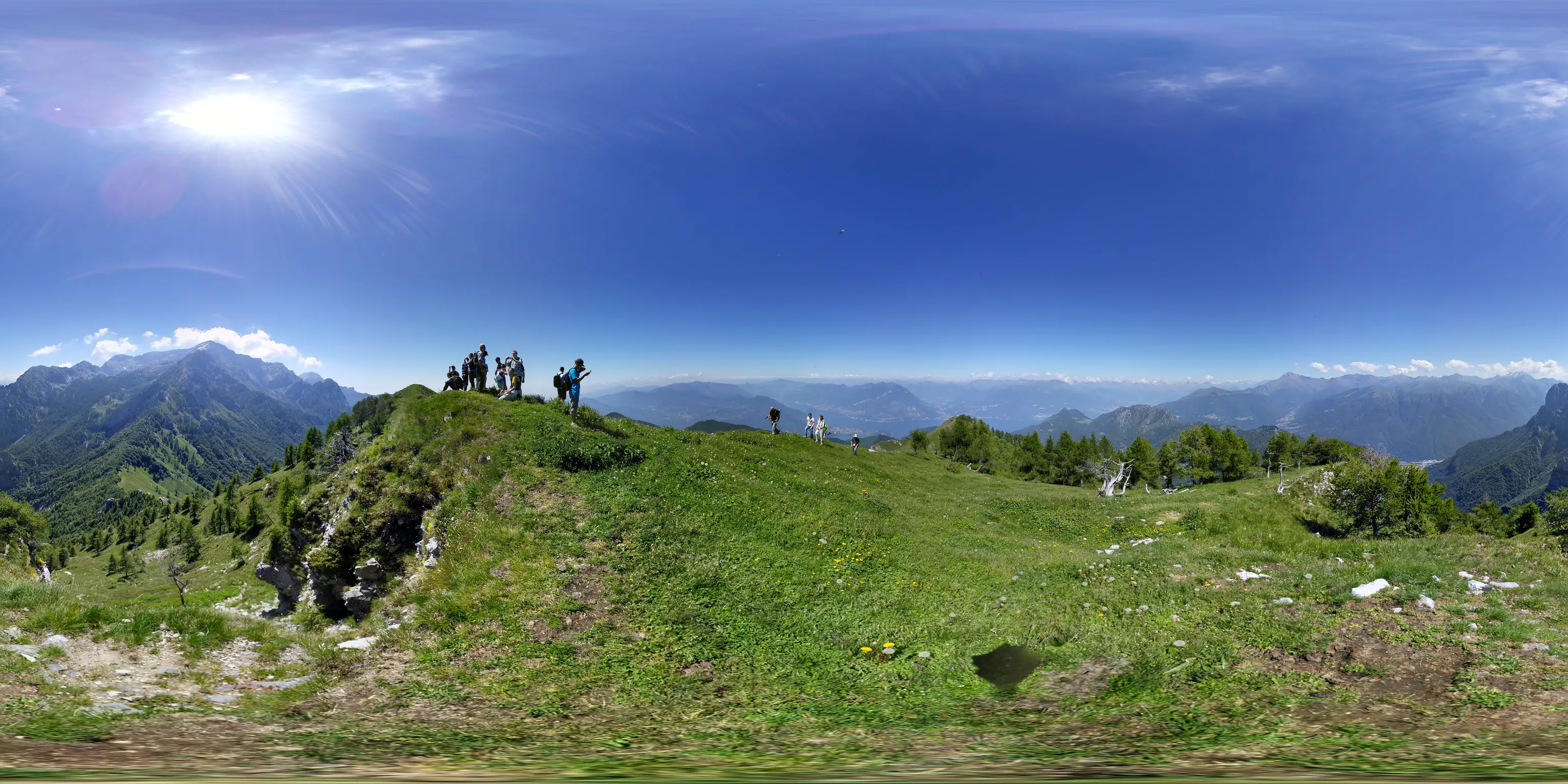
A 360 drone like the A1 records the entire sphere in one pass, so any direction becomes a shot you choose afterward. Drag the sample 360° photo below to look around, or flip between a normal drone and a 360 drone to feel the difference:

Sample 360 degree scene
Your shotSample 360° photodrag in any direction
The full 360° sphere captured in one shot. The orange box is the single frame you kept out of it.

A push in the direction of travel, the one shot a normal gimbal drone would frame.

The point: a normal gimbal drone only keeps the single angle you pointed at while flying. A 360 drone keeps everything, so you frame the shot after you land.Demo only, to show how 360 reframing works. Sample full-sphere photo (Monte Croce, Italy) by Cmglee, CC BY-SA 4.0. Not A1 footage.

Our Verdict

Most buyers should choose the DJI Avata 360 for its sharper image quality, lower entry price, and the flexibility to fly with or without goggles, a view the reviewer consensus (TechRadar, Tom's Guide, Engadget) shares. Choose the Antigravity A1 specifically for its 249g weight, foldable portability, and registration-free flight. Just remember the A1's high-capacity battery pushes it to about 291g and forfeits that sub-250g advantage.

DJI Avata 360
4.5
Antigravity A1
4.3
DJI Avata 360
Our Pick

DJI Avata 360

4.5/5 overall · $719

Paul PoseaWritten by Paul Posea · Reviewed by Marcus Taylor · Updated 2026-07-01