• Find My Drone
8K 360 Drone

Antigravity A1 Review: The World's First 8K 360 Drone

In-depth analysis featuring aggregated ratings, real user opinions, and expert reviewer insights for the Antigravity A1.

Antigravity A1 - 249g 8K at 30fps camera drone
Camera8K/30fps
Battery life24 min
Range10km
Weight249g
Antigravity A1
Budget$0–$200
Mid-Range$200–$500
Enthusiast$500–$1000
Premium$1000–$2500
Pro$2500+
Paul PoseaAnalysis by Paul Posea · Updated Jul 1, 2026
Marcus TaylorVerified by Marcus Taylor

Which Antigravity A1 Bundle Should You Buy?

The bundles differ mainly in batteries, and one choice quietly changes what the law requires of you. Answer two questions for a recommendation.

Bundle finder
How long do you want to fly per outing?
Do you want to stay registration-free (under 250g)?
Our recommendation
StandardExplorerInfinity
Explorer BundleBest value for real sessions
$1,419$1,899
Save $480
  • A1 drone + Vision Goggles + Grip controller
  • 3 standard batteries (still 249g each, ~24 min)
  • Charging hub, case + shoulder bag, 8 propellers

Three standard batteries give you roughly an hour of total airtime while every one keeps the A1 at 249g, so you stay registration-free. For $140 over Standard it is the sweet spot for most pilots.

See the Explorer bundle

Antigravity A1 Ratings

4.3/5
Overall ScoreBased on aggregated ratings across 12+ criteria
Camera Quality
4.3
Ease of Use
3.9
Build Quality
4.4
Features
4.6
Portability
4.7
Value for Money
3.8

Antigravity A1 Pros & Cons

After aggregating data from expert reviews, user feedback, and hands-on testing reports, here are the standout strengths and notable limitations of the Antigravity A1.

Pros
  • World's first 8K 360 drone. Two lenses capture everything around the drone at once, so you frame the shot afterward instead of nailing it mid-flight.
  • Just 249g and foldable. With the standard battery it slips under the 250g line and packs down small enough for any bag.
  • Immersive goggle flight. The bundled Vision Goggles (dual 2560x2560 micro-OLED) with head tracking make flying feel like you are onboard.
  • Reframe any angle after landing. Pull forward, reverse, side-tracking, or orbit shots out of a single pass in the Antigravity app.
  • Genuinely quiet. Reviewers report it is barely audible from 150 to 200 meters away, unusual for a drone this capable.
  • Insta360 imaging pedigree. The 360 capture and stabilization lean on Insta360's proven action-cam engineering.
Cons
  • "8K" is the full-sphere number. Reframed to a normal shot the usable resolution is closer to 2.7K, and the live goggle feed maxes at 2K.
  • The goggles are mandatory. There is no screen-only flying at launch, so you effectively need a spotter to stay legal and safe.
  • The high-capacity battery crosses 250g. It reaches about 291g, which triggers FAA and EU registration and forfeits the sub-250g advantage.
  • App and firmware friction. Owners report large updates, connection drops, and occasional export crashes in the beta editing app.
  • Obstacle avoidance is limited. It is effectively front and downward only, active in the calmer flight modes, not a true 360 safety net.
  • No manual or acro mode yet. A conventional stick controller was still pending at launch, so freestyle pilots are out of luck.

Who Is It For

Great for
  • Travel and adventure creators who want one immersive shot of everything, framed later
  • Vloggers who fly solo and hate pointing a gimbal while piloting
  • Pilots who want to stay under 250g and registration-free (standard battery)
  • Insta360 users comfortable with a reframe-in-post workflow
Not ideal for
  • FPV freestyle pilots who need manual acro and a stick controller
  • Anyone who wants true, delivery-ready 8K rather than a 360 sphere
  • Buyers who dislike wearing goggles or flying without a screen
  • Pros needing omnidirectional obstacle avoidance for tight spaces

Fly First, Frame Later: How a 360 Drone Works

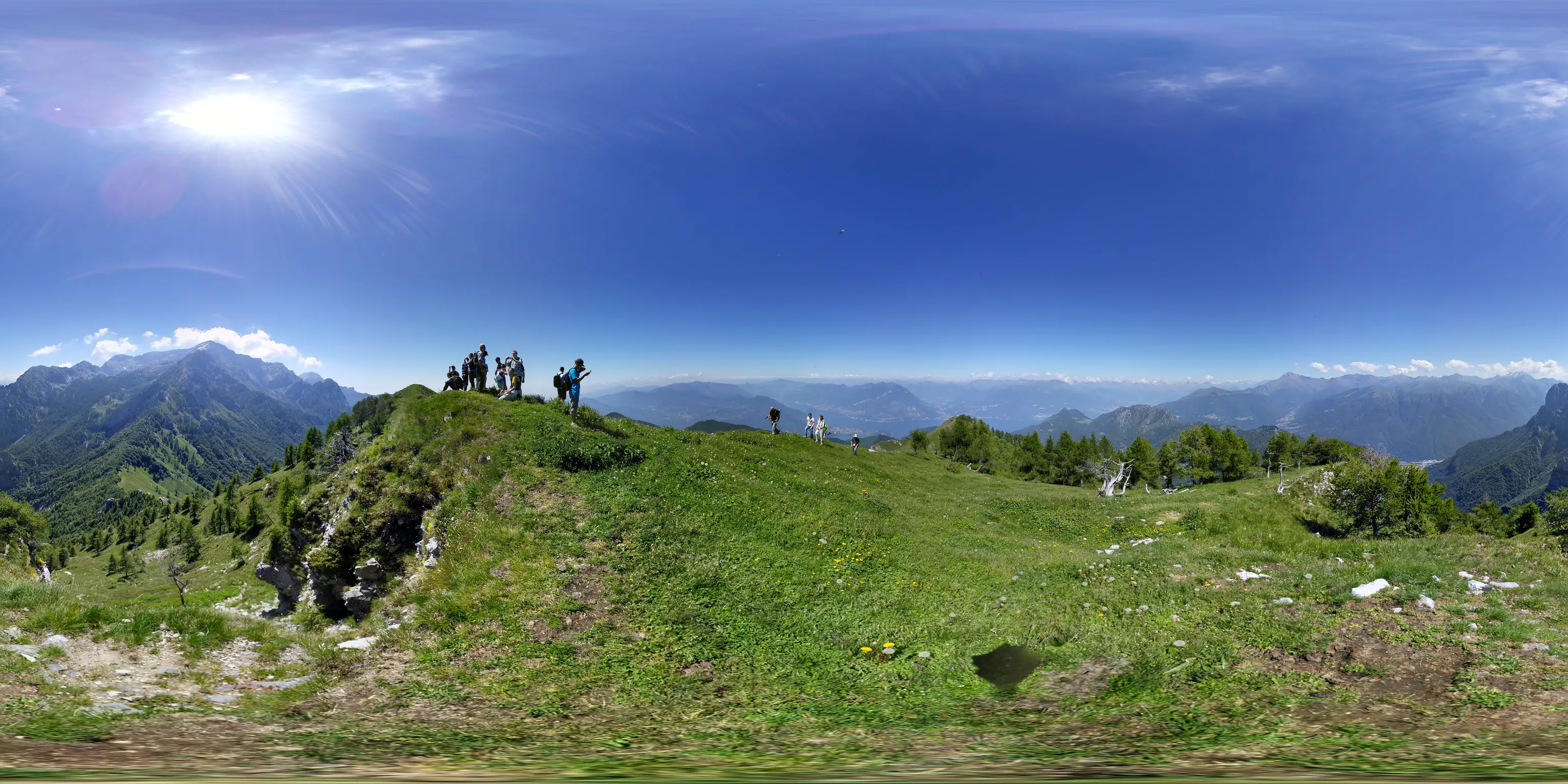
The A1's big idea is that you frame the shot after the flight, not during it. Here is how that works, with a sample 360° photo you can look around:

See how 360 reframing works

A 360 drone like the A1 records the entire sphere in one pass, so any direction becomes a shot you choose afterward. Drag the sample 360° photo below to look around, or flip between a normal drone and a 360 drone to feel the difference:

Sample 360 degree scene
Your shotSample 360° photodrag in any direction
The full 360° sphere captured in one shot. The orange box is the single frame you kept out of it.

A push in the direction of travel, the one shot a normal gimbal drone would frame.

The point: a normal gimbal drone only keeps the single angle you pointed at while flying. A 360 drone keeps everything, so you frame the shot after you land.Demo only, to show how 360 reframing works. Sample full-sphere photo (Monte Croce, Italy) by Cmglee, CC BY-SA 4.0. Not A1 footage.

Can You Fly the Antigravity A1?

Weight is where the A1 gets interesting. With the standard battery it stays under the 250g line that most registration rules hang on. The high-capacity battery does not.

Interactive

249g with the standard battery, about 291g with the high-capacity battery.

Good to fly with no paperwork
Registration (standard battery)Not required under 250g
Registration (high-capacity battery)Required, $5 (over 250g)
Recreational testFree TRUST certificate
Goggles / FPVVisual observer (spotter) required

Registration-free for recreational flight on the standard battery (under 250g). Pass the free TRUST test and fly.

US Drone Laws

The high-capacity battery changes the rules

Swapping to the high-capacity battery pushes the A1 to roughly 291g, over the 250g threshold. That means FAA registration in the US and EU C1 classification, even though the same drone is exempt on the standard battery.

Rules change often and vary locally. Always confirm current requirements with your national aviation authority before flying.

Claims vs Reality

The A1 is a genuinely new product, but a few of its headline numbers need context before you buy.

Claims 8K 360 video

Half-true

That is the full-sphere figure. Reframed into a normal shot the usable resolution lands nearer 2.7K, and the live goggle view maxes at 2K.

Claims 24 min (standard) / 39 min (high-capacity) flight

Half-true

Independent testing lands closer to 15 to 17 minutes on the standard battery and 25 to 28 on the high-capacity, less when recording 8K.

Claims 360 obstacle avoidance

Half-true

In practice it senses front and downward, only in the calmer flight modes, and struggles with thin obstacles like branches.

Claims 10 km transmission range

Half-true

A clean feed in the real world runs closer to 2 km, degrading faster through obstacles than DJI's O4 system.

None of this makes the A1 a bad drone. It is an honest picture of what the marketing figures mean in the field.

Who Makes the Antigravity A1?

The A1 is the first product from Antigravity, a drone brand incubated by Insta360, the Chinese company behind the popular X-series 360 action cameras. That heritage matters: the A1's dual-lens capture and stabilization are built on the same technology that made Insta360 the leader in consumer 360 imaging.

It was announced in August 2025 and shipped globally in December 2025. So no, it is not an American-made drone, but it is also not an unknown quantity. It is a first-generation product from an established camera maker, which explains both its polish (imaging, hardware) and its rough edges (beta software, a control scheme still filling out).

Note: Because the A1 is so new, firmware and the companion app are still maturing. Expect updates to improve stability and add features like the promised stick controller.

Is the Antigravity A1 Worth It in 2026?

If you want the thing only the A1 does, capture the whole sphere in one immersive goggle flight and frame the shot later, nothing else on the market matches it, and it is worth every dollar. The 249g standard weight and quiet motors are a real bonus.

If you mainly want the highest-resolution aerial footage or you fly for precision and freestyle, a traditional gimbal drone or an FPV rig will serve you better for the money. The A1 is a specialist, and a brilliant one, not an all-rounder. Use the bundle finder above to match the right kit to how you actually fly.

Antigravity A1 Full Specifications

Resolution
8K at 30fps
Sensor Size
Dual 1/1.28-inch
Frame Rate
8K/30fps, 5.2K/60fps, 4K/100fps
HDR
Yes
RAW/DNG
No
Gimbal
360 digital stabilization
Aperture
f/2.2
Flight Time
24 minutes
Control Range
10 km (FCC)
Max Speed
16 m/s
Obstacle Avoidance
Yes
GPS
Yes
Return to Home
Yes
Follow Me
Yes
Weight
249g
Foldable
Yes

Antigravity A1 vs DJI Avata 360 vs DJI Avata 2

How the A1 stacks up against the two DJI drones buyers cross-shop it with. The orange cell wins each row.

Head to headSub-250gAntigravity A1$1,279DJI Avata 360$719DJI Avata 2$619
360° video8K30 full 3608K60 full 360No (single-lens FPV)
Camera sensorDual 1/1.28"Dual 1/1.1" 64MP1/1.3" 12MP
Weight249g455g377g
Sub-250g, no registrationYes (standard battery)NoNo
Max flight time24 min (39 high-cap)23 min23 min
Fly without gogglesNoYesNo
Reframe any angle after flyingYesYesNo
Entry priceThe A1's price includes the Vision Goggles and Grip controller; DJI's entry prices do not.$1,279$719$619
Best forTravel & immersive 360, license-freeBest-value 360 with DJI's ecosystemPure FPV adrenaline
Rows won441

Prices are current US entry configurations and shift with sales. The A1 and Avata 360 are true 360 drones; the Avata 2 is a single-lens FPV drone included as the popular non-360 alternative.

Real-World Performance

Reality check

Real-World Flight Time

Minutes per charge

Standard battery, advertised24 min
What you actually get
Standard battery, real-world~16 min
High-capacity, advertised39 min
High-capacity, real-world~27 min

Plan for spare batteries

Recording 8K drains the pack faster. Most owners carry at least three batteries, which is exactly why the Explorer and Infinity bundles exist.

See the Antigravity A1 in Action

An independent hands-on review and flight test, so you can judge it in the real world before buying.

Beyond specs and feature lists, what matters most is how the Antigravity A1 performs in the hands of real owners and professional reviewers. Below, we break down sentiment from across the web — from Reddit communities to expert publications.

What Real Users Say

80%positive
sentiment
What users love (80%)
  • Owners describe the goggle-plus-360 experience as unlike any other drone, especially for reveals and follow shots.
  • The sub-250g standard weight and quiet motors make it easy to fly casually without drawing attention.
  • Reframing footage after the flight removes the pressure of pointing the camera perfectly in the moment.
User concerns (20%)
  • Several report a learning curve with the app and long firmware updates before the first flight.
  • A few note that final reframed resolution and low-light footage fall short of the 8K marketing.

What Reviewers Say

85%positive
sentiment
What reviewers love (85%)
  • Gizmodo called it genuinely new and gave it an Editors' Choice, praising the immersive flight experience.
  • Oscar Liang credited the 360 workflow and portability while documenting the honest resolution and latency trade-offs.
  • SlashGear and Digital Camera World both frame it as a category-defining first, not just another camera drone.
Reviewer concerns (15%)
  • Reviewers consistently flag the gap between the 8K headline and the reframed real-world resolution.
  • The goggles-only control scheme and beta-stage software draw repeated criticism.

Compare With

FAQ

The A1 is made by Antigravity, a drone brand created by Insta360, the Chinese company known for its X-series 360 action cameras. It was announced in August 2025 and released globally in December 2025.

The Standard bundle is currently about $1,279 (down from a $1,599 launch price), the Explorer bundle about $1,419, and the Infinity bundle about $1,599. Every bundle includes the drone, the Vision Goggles, and the Grip controller. Prices shift with sales.

For most people the Explorer bundle is the sweet spot: three standard batteries give roughly an hour of total airtime while keeping the drone under 250g. Choose Standard if you only fly one pack at a time, or Infinity if you want the longest single flights and do not mind registering the heavier configuration.

It records a full 8K 360 sphere, but that resolution is spread across everything around the drone. When you reframe a normal, flat shot out of the footage, the usable resolution is closer to 2.7K, and the live goggle feed maxes out around 2K.

With the standard battery the A1 weighs 249g and is exempt from registration for recreational flight in the US and most regions. The high-capacity battery pushes it to about 291g, which crosses the 250g line and does require registration.

Not at launch. Flying the A1 requires the Vision Goggles, so you cannot pilot it from a phone screen alone. Because you cannot see your surroundings while wearing goggles, you should fly with a visual observer (spotter), which is also a legal requirement for FPV flight in many places.

Advertised flight time is 24 minutes on the standard battery and 39 on the high-capacity. Real-world testing lands closer to 15 to 17 and 25 to 28 minutes respectively, less when recording 8K. A clean transmission feed runs to roughly 2 km in practice versus the 10 km FCC rating.

It is beginner-friendly in that you do not have to frame shots perfectly while flying, and palm-simple goggle flight is intuitive. The learning curve is the app, the goggle-only control, and the reframe-in-post workflow. Casual flyers who just want quick clips may find a simpler sub-250g drone easier.

The A1 wins on weight (249g vs 455g), sub-250g registration-free flight, and portability. The DJI Avata 360 wins on sensor size, 8K60 capture, the option to fly without goggles, and a lower entry price. See our full spec matrix above for a row-by-row breakdown.

Some pilots report mild VR-style discomfort during fast head movements or long goggle sessions, as with any immersive headset. Most adjust quickly. If you are prone to motion sickness, start with short flights and smooth movements.

If you want immersive 360 flight and the freedom to frame shots after landing, it is a genuinely one-of-a-kind drone and worth the price. If you want the sharpest possible traditional aerial footage or freestyle FPV performance, a gimbal or FPV drone is a better value.