On December 23, 2025, the FCC added DJI and Autel Robotics to the Covered List under the Secure and Trusted Communications Networks Act. This is the same list that got Huawei and ZTE removed from US telecom networks. The immediate practical effect for consumers: new DJI and Autel products can no longer be legally imported. Existing inventory at US retailers can still be sold and purchased, and drones you already own can still be flown. But future DJI models won't make it to US shelves without a legislative fix.
This changes the DJI alternatives landscape completely. Autel was the main competitor, but the Autel EVO Nano+ and Lite+ lines were already discontinued in July 2025 before the FCC ruling. Skydio exited the consumer market in August 2023 and now sells exclusively to government and enterprise customers. What's left in early 2026 is a thin but real market: Potensic with the Atom 2, HoverAir with the X1 Pro Max, and Parrot for government-only NDAA-compliant work.
This guide covers the actual state of the DJI alternative market in 2026, what the FCC ban means for buyers, which remaining options are genuinely competitive, and where the gaps between DJI and everything else still exist.
The FCC Ban and What It Means for DJI Alternative Buyers
What the December 2025 FCC Ruling Actually Does
The FCC Covered List designation affects equipment authorization and federal funding. In practical terms, it means the FCC cannot grant new equipment authorizations for DJI products, and federal agencies cannot purchase DJI drones using federal funds. For consumers, the direct impact is more indirect: new DJI products won't be able to enter the US market legally, though existing inventory is unaffected.
A January 7, 2026 FCC exception allows continued use of products on the Blue UAS Cleared List through January 1, 2027. This list is managed by the Defense Innovation Unit and includes drones verified as posing no national security risk. DJI is not on the Blue UAS list. Skydio, Parrot, and several US-manufactured platforms are.
What You Can Still Do With DJI
Buy DJI drones currently in US retailer stock (legal, unaffected)
Fly DJI drones you already own (no restrictions on personal use)
Use DJI drones for commercial Part 107 work as a private company (not restricted for non-federal contractors)
Purchase DJI accessories and batteries from existing US inventory
What Has Changed for New Buyers
If you're buying new today without a strong reason to stay within existing DJI inventory, the question of alternatives is real. Future DJI models (the Mini 6 Pro, Air 4S, or whatever comes next) will not enter the US market under current law. Buying a current DJI model means committing to a platform without an upgrade path through normal retail channels.
Note: The FCC ban does not affect DJI drones for recreational or commercial use by private individuals and companies. It primarily affects federal procurement and equipment authorization for new imports. Existing DJI drones remain fully legal to fly.
Best DJI Alternatives: The Potensic Atom 2
The DJI alternative market in 2026 is smaller than it's ever been, but the Potensic Atom 2 is a genuine competitor in the sub-250g category
Why Potensic Is the Main Remaining Consumer Alternative
With Autel's consumer line discontinued and Skydio enterprise-only, Potensic is the only company actively selling competitive consumer camera drones in the US market that aren't DJI. The Potensic Atom 2 at $330 is the most direct competitor to the DJI Mini 4 Pro in the sub-250g category.
Specs: 1/2-inch Sony CMOS sensor, 4K video with RAW photo capture, 3-axis mechanical gimbal, 38-minute flight time, and 10 km control range. The camera is genuinely competitive with the DJI Mini 3 at a lower price point. It undercuts the DJI Mini 4 Pro ($759) by more than $400 while hitting the most important spec boxes.
Where the Atom 2 Falls Short of DJI
The control link is the biggest gap. Potensic uses a standard 2.4GHz radio with a 10 km spec range, but real-world performance in congested airspace is meaningfully shorter than DJI's O4 transmission at 20 km. DJI's O4 uses adaptive frequency hopping across multiple bands with low-latency video feedback that consumer competitors haven't matched.
The DJI app ecosystem is also a practical advantage. Litchi, DroneDeploy, and dozens of flight planning apps support DJI drones natively. The Potensic Atom app is functional but doesn't have the same third-party integration depth.
At $330, the Potensic Atom 2 is the best value consumer drone alternative to DJI that's actively available in the US market in 2026.
DJI Alternatives for Specific Use Cases
Autel's EVO Nano+ and Lite+ are discontinued as of July 2025 but remain available through US retailers with existing stock
For Sub-250g Camera Work: Autel EVO Nano+ (While Stock Lasts)
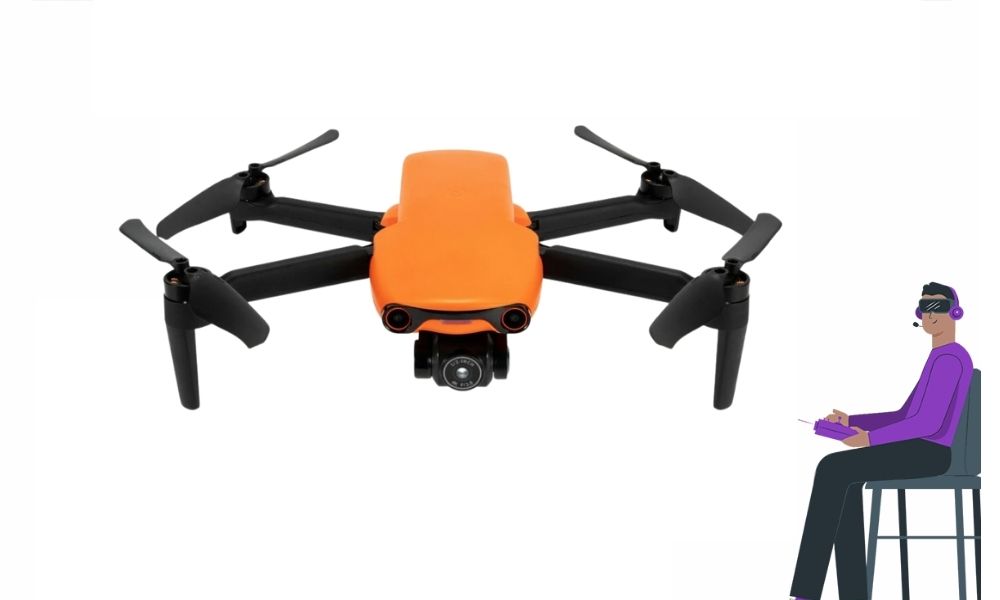
The Autel EVO Nano+ is discontinued but still available from US retailers clearing remaining stock. It's worth buying if the price has dropped significantly (check current listings). It has a 1/1.28-inch CMOS sensor, 4K/30fps, 3-axis gimbal, and 28-minute flight time at 249g. Autel's SkyLink transmission tops out at 10 km versus DJI's 20 km, but for most recreational flying that gap is academic.
The main caveat: no warranty from Autel on discontinued models, and no future software updates. If you're buying for a multi-year use case, factor in that the Autel app and firmware may not receive updates for new mobile OS versions.
For a Direct DJI Mini 4 Pro Alternative: SkyRover X1
The SkyRover X1 ($539 to $629) is sub-249g and designed as a direct Mini 4 Pro competitor. It has a 1/1.3-inch CMOS sensor, 4K video, 3-axis gimbal, and roughly 34 minutes of flight time. Fstoppers ran a dedicated head-to-head comparison against the DJI Mini 4 Pro and found the SkyRover competitive on image quality while undercutting DJI on price. It is actively available in the US and, unlike Autel's discontinued consumer line, is current inventory rather than clearance stock.
The SkyRover X1 has less ecosystem support than DJI and no equivalent of the DJI Fly app's third-party integrations. But as a straightforward camera drone at under 250g, it is one of the most direct drop-in alternatives available in early 2026.
For 360° Immersive FPV Video: Antigravity A1
The Antigravity A1 (from $1,279) is a different category entirely. It is described by UAV Coach, Pilot Institute, and Digital Camera World as the only consumer drone built specifically for 360-degree immersive FPV footage. It is not a camera drone in the DJI Mini/Air sense: it targets filmmakers and VR content creators who want omni-directional capture rather than a stabilized downward-pointing lens.
If standard aerial photography is your use case, the Antigravity A1 is not a DJI replacement. If 360° VR footage is your goal, it is now one of two consumer options, alongside the DJI Avata 360. Our Antigravity A1 vs DJI Avata 360 comparison breaks down which to pick.
For Autonomous Selfie Video: HoverAir X1 Pro Max
The HoverAir X1 Pro Max is a prop-caged autonomous selfie drone at 192.5g with 8K video and 16-minute flight time. There's no remote controller: it follows you using computer vision and runs pre-programmed shot modes. DJI has nothing comparable (the discontinued Spark required a controller).
For NDAA-Compliant Government and Enterprise Work: Parrot
Parrot drones are on the Blue UAS Cleared List and are NDAA Section 848 compliant. The ANAFI USA Gov is designed for government and public safety use at $6,000+. Not relevant for recreational or standard commercial Part 107 work.
For FPV and Racing: Non-DJI FPV Options
Alternatives for FPV video transmission include Walksnail Avatar and HDZero, both competitive with DJI's digital FPV systems and neither on the FCC Covered List.
What DJI Does Better Than Its Alternatives
Obstacle Avoidance
DJI's obstacle avoidance systems are in a different category from consumer alternatives. The Mini 4 Pro has omnidirectional obstacle sensing. The Mavic 4 Pro has front/back/side/upward sensing with APAS 5.0 active path planning. Potensic's consumer drones have no obstacle avoidance. The HoverAir X1 Pro Max has forward-only sensing for subject tracking.
For beginners or pilots flying in complex environments (forests, urban canyons, around structures), DJI's obstacle avoidance is a meaningful safety feature that alternatives don't provide at equivalent price points.
O4 Transmission vs. Consumer Alternatives
System
Drone
Range
Frequency
Latency
DJI O4
Mini 4 Pro, Air 3S
20 km
2.4/5.8 GHz adaptive
~100 ms
DJI O4+
Mavic 4 Pro
41 km
2.4/5.8/6 GHz adaptive
~80 ms
Autel SkyLink
EVO Nano+, Lite+
10 km
2.4/5.8 GHz
~120 ms
Potensic Pro Link
Atom 2
10 km
2.4 GHz
~150 ms
Software Ecosystem
DJI Fly is the most polished consumer drone app, and the DJI ecosystem has the deepest third-party integration. Litchi, Dronelink, DroneDeploy, and Pix4D all have native DJI support. Potensic's app works well for basic flying but doesn't support the same automation and mission planning workflows.
Note: For recreational flying, the software ecosystem difference matters less. For commercial work, photogrammetry, or automated mission planning, DJI's third-party app support is a real practical advantage.
Which DJI Alternative Should You Buy in 2026?
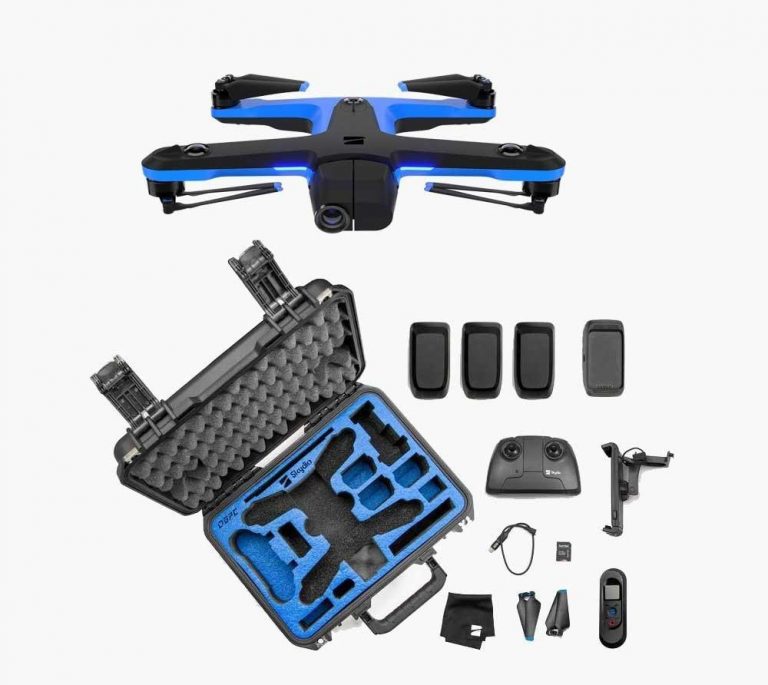
Skydio exited the consumer market in August 2023 and now sells exclusively to government and enterprise customers starting at several thousand dollars
If You Want a Traditional Camera Drone Under 250g: Potensic Atom 2
The Potensic Atom 2 at $330 is the honest recommendation for anyone who needs a DJI alternative in the sub-250g consumer camera segment. It covers the main requirements: 4K video, RAW photos, 3-axis gimbal, GPS, 38 minutes of flight time. The control range and obstacle avoidance don't match DJI, but for recreational flying within visual line of sight, neither matters much in practice.
If You Want an Affordable Entry Point: Potensic Atom SE or Atom LT
For budget-focused buyers, the Potensic Atom SE ($199) and Atom LT ($149) offer sub-250g GPS drones with basic camera capabilities. Neither will produce footage competitive with a DJI Mini series, but they're fully functional drones for learning and casual use without the DJI premium.
If You Want Something Different from a Traditional Drone: HoverAir X1 Pro Max
The HoverAir X1 Pro Max ($600) is not a DJI replacement. It's a different product category: autonomous, prop-caged, no controller required, designed for solo adventure shooting. If a traditional piloted drone isn't what you need, this is the most interesting non-DJI option available.
If You Can Still Buy DJI: It's Still the Best Option
The FCC ban affects future imports. Current DJI inventory at US retailers is still available, still legal, and still the best camera drone value at almost every price point. The DJI Mini 4 Pro at $759 outperforms every available alternative on obstacle avoidance, transmission quality, app ecosystem, and image quality. If the upgrade path uncertainty over the next 3 to 4 years is acceptable to you, buying current DJI inventory is still the most pragmatic choice for most buyers.
The honest summary: in early 2026, DJI is still the best choice for most buyers using existing US inventory. The Potensic Atom 2 is the best genuine alternative if you need one.
FAQ
The Potensic Atom 2 ($330) is the best consumer camera drone alternative to DJI actively available in the US in 2026. It has a 1/2-inch Sony CMOS sensor, 4K/RAW, 3-axis gimbal, and 38-minute flight time under 250g. The main gaps versus DJI are control range (10 km vs 20 km) and no obstacle avoidance.
Not banned for consumer or commercial use. In December 2025, the FCC added DJI to its Covered List, which prevents new equipment authorizations and federal procurement of DJI products. Existing DJI drones can still be purchased from US retailer stock, owned, and flown legally by private individuals and companies. Only federal agencies are restricted from buying DJI.
Autel made competitive DJI alternatives, but the EVO Nano+ and EVO Lite+ lines were discontinued in July 2025. Remaining stock is still available at US retailers and worth buying if the price is right, but expect no future firmware updates or warranty support from Autel on these discontinued models.
Not for consumers. Skydio exited the consumer drone market in August 2023 and now sells exclusively to government, public safety, and enterprise customers. Their drones are Blue UAS listed and NDAA compliant. Prices start at several thousand dollars. Skydio is not an option for recreational or standard commercial drone use.
The Blue UAS Cleared List is managed by the Defense Innovation Unit and includes drones verified as posing no national security risk for federal use. Current cleared manufacturers include Skydio, Parrot, Autel (enterprise models), and several US-manufactured platforms. DJI is not on the list. The list is updated periodically at the AUVSI website.
The HoverAir X1 Pro Max is a good option if you specifically want autonomous selfie video without a remote controller. It is not a traditional drone substitute: it has no manual flight control, limited range, and 16-minute flight time. But for solo action and travel shooting where you want to avoid carrying a controller, it's unique.
Yes. US retailers still have existing DJI inventory that can be legally purchased and used. The FCC's December 2025 ruling prevents new DJI imports and federal procurement, but does not restrict private purchase of existing stock or personal and commercial use of drones you already own.
Parrot (ANAFI USA Gov), Skydio (enterprise models), and several US-manufactured platforms are NDAA Section 848 compliant and on the Blue UAS Cleared List. These are primarily enterprise and government products at $2,000 to $10,000+. There are no consumer-priced NDAA-compliant alternatives to DJI's recreational drone lineup.
Paul Posea founded Dronesgator in 2015 and has been reviewing consumer drones for over a decade. With 195 YouTube drone reviews drawing 3.55 million views and published work on Digital Photography School, he combines hands-on flight testing with data-driven analysis to help pilots find the right drone.
Marcus Taylor is a UK CAA certified drone pilot and owner of Deployed Consultancy Ltd. With 6 years of commercial experience spanning UN site surveys in West Africa, aerial photography across Europe, Africa, and Japan, and defence consulting, he verifies the technical accuracy of Dronesgator's drone reviews and guides.


 4K/30fps
 32 min
 10km
10km