• Find My Drone

Best Drones for Surveying & Mapping in 2026: 7 Picks for RTK, GSD & Accuracy

Updated

By Paul Posea

Best Drones for Surveying & Mapping in 2026: 7 Picks for RTK, GSD & Accuracy - drone reviews and comparison

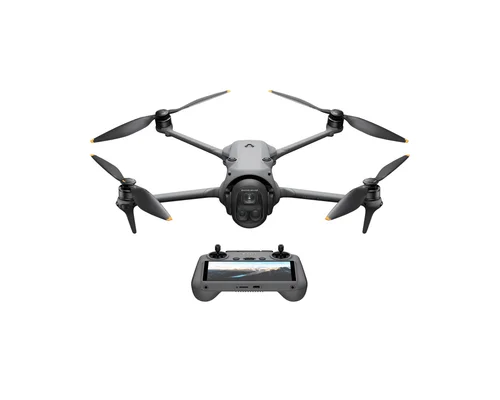
DJI Mavic 3 Enterprise - Best Professional Surveying Drone

DJI Mavic 3 Enterprise review - 1050g 4K/30fps camera droneBuy Now
View on DJI Enterprise
Read Full Analysis
Camera4K/30fps
Battery life45 min
Range15km
Weight1050g
Camera quality
Ease of use
Build quality
Features
Portability
Value for Money

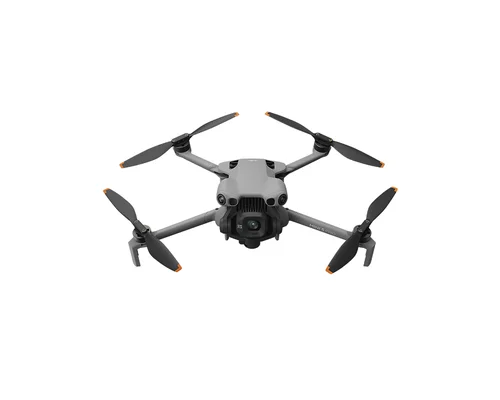
DJI Mavic 4 Pro - Best Prosumer for Site Documentation

DJI Mavic 4 Pro review - 1063g 6K/60fps camera droneBuy Now
View on DJI Official
Read Full Analysis
Camera6K/60fps
Battery life51 min
Range30km
Weight1063g
Camera quality
Ease of use
Build quality
Features
Portability
Value for Money

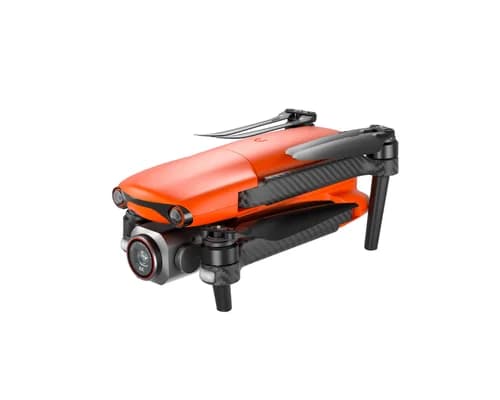
Autel EVO II Pro RTK V3 - Best Non-DJI Survey Drone

Autel EVO II Pro RTK V3 review - 1237g 6K/30fps camera droneBuy Now
View on Autel Robotics
Read Full Analysis
Camera6K/30fps
Battery life38 min
Range15km
Weight1237g
Camera quality
Ease of use
Build quality
Features
Portability
Value for Money

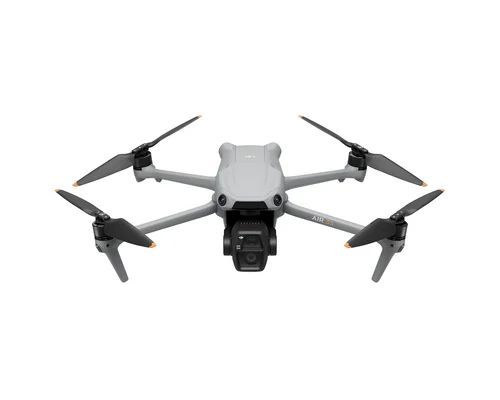
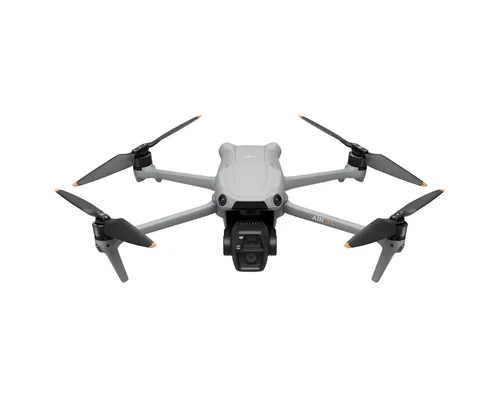
DJI Air 3S - Best Value for Small-Scale Mapping

DJI Air 3S review - 724g 4K/120fps camera droneBuy Now
View on DJI Official
Read Full Analysis
Camera4K/120fps
Battery life45 min
Range20km
Weight724g
Camera quality
Ease of use
Build quality
Features
Portability
Value for Money

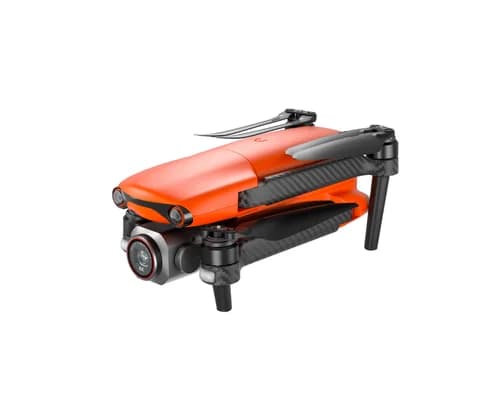
Autel EVO Lite+ - Best Variable Aperture for Mapping

Autel EVO Lite+ review - 835g 6K/30fps camera droneBuy Now
View on Autel Robotics
Read Full Analysis
Camera6K/30fps
Battery life40 min
Range12km
Weight835g
Camera quality
Ease of use
Build quality
Features
Portability
Value for Money

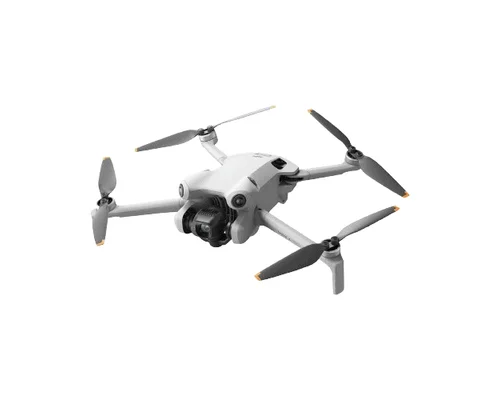
DJI Mini 5 Pro - Best Lightweight for Quick Surveys

DJI Mini 5 Pro review - 249.9g 4K/120fps camera droneBuy Now
View on DJI Official
Read Full Analysis
Camera4K/120fps
Battery life36 min
Range20km
Weight249.9g
Camera quality
Ease of use
Build quality
Features
Portability
Value for Money

DJI Mini 4 Pro - Best US Warranty Entry-Level

DJI Mini 4 Pro review - 249g 4K/100fps camera droneBuy Now
View on DJI Official
Read Full Analysis
Camera4K/100fps
Battery life34 min
Range20km
Weight249g
Camera quality
Ease of use
Build quality
Features
Portability
Value for Money

How They Compare

Our top five surveying and mapping drones compared across camera resolution, RTK capability, flight time, and weight. The Mavic 3 Enterprise leads for professional survey work, while the Air 3S offers the best value for smaller-scale mapping projects.

Swipe to see all drones →

Comparison of top drones under 250g - specs, ratings, and prices
DJI Mavic 3 Enterprise - Best Professional Surveying Drone
DJI Mavic 3 Enterprise
DJI Mavic 4 Pro - Best for Luxury Real Estate
DJI Mavic 4 Pro
Autel EVO II Pro RTK V3 - Best Non-DJI Survey Drone
Autel EVO II Pro RTK V3
DJI Air 3S - Best Follow-Me Drone
DJI Air 3S
Autel EVO Lite+ - Best Non-DJI Alternative
Autel EVO Lite+
4.4
4.7
4.2
4.5
3.8
Price$3899$2199$2999$1099$899
BrandDJIDJIAutel RoboticsDJIAutel
CategoryBest Professional Surveying DroneBest for Luxury Real EstateBest Non-DJI Survey DroneBest Follow-Me DroneBest Non-DJI Alternative
Flight Time45 min51 min38 min45 min40 min
Range15 km30 km15 km20 km12 km
Camera4K/30fps6K/60fps6K/30fps4K/120fps6K/30fps
HDR
RAW/DNG
Weight1050g1063g1237g724g835g
Obstacle Avoidance
GPS
Follow Me
Buy NowBuy NowBuy NowBuy NowBuy Now

How We Ranked the Best Drones for Surveying & Mapping

We evaluated each drone on five criteria specific to survey and mapping work, weighted differently than our consumer roundups. Positional accuracy and sensor quality matter more here than portability or ease of use.

Positional Accuracy

For professional surveying, position matters more than pixels. We prioritized drones with RTK (Real-Time Kinematic) capability that deliver centimeter-level horizontal accuracy (1cm + 1ppm). Drones without RTK can still produce useful maps, but they require more ground control points (GCPs) and post-processing to achieve comparable accuracy. We noted which drones support PPK (Post-Processing Kinematic) as a fallback for areas without NTRIP cell coverage.

Sensor Quality & Shutter Type

Ground sampling distance (GSD) determines the smallest feature you can resolve in your orthomosaic. Larger sensors with more megapixels let you fly higher while maintaining the same GSD -which means faster area coverage. We also weighted mechanical shutters heavily, because electronic rolling shutters create geometric distortions that compound across overlapping images. The DJI Mavic 3 Enterprise is the only drone here with a mechanical shutter.

Software Integration

A surveying drone is only as useful as its integration with mapping software. We tested compatibility with Pix4D, DroneDeploy, DJI Terra, and Agisoft Metashape. Seamless mission planning, automated flight paths, and direct image-to-processing pipelines reduce the time between flying and delivering results to clients.

Flight Time & Coverage

Survey efficiency is measured in area covered per battery. Longer flight times with stable GPS positioning mean fewer battery swaps and fewer mission interruptions. We calculated approximate coverage at standard mapping altitudes (80-120m AGL) for each drone.

Regulatory Compliance

All drones over 250g require FAA registration and Part 107 certification for commercial survey work. We noted DJI's FCC Covered List status for organizations with government contract requirements, and Autel's position as a non-DJI alternative -though neither Chinese manufacturer is NDAA-compliant for federal work. Organizations needing NDAA compliance should look at platforms like the Skydio X10 or Parrot ANAFI USA, which are beyond this roundup's scope.
RTK vs PPK: What Surveyors Need to Know About Drone Accuracy

The biggest decision in survey drone selection isn't camera resolution -it's how you achieve positional accuracy. RTK and PPK are the two main approaches, and they suit different workflows.

RTK (Real-Time Kinematic)

RTK corrections happen in real-time during flight. The drone receives correction data from either a base station on site or an NTRIP network over cellular data. Each image is geotagged with centimeter-level coordinates as it's captured. The advantage: your images land in processing software already accurately positioned, which dramatically reduces the number of ground control points you need. The disadvantage: you need reliable cellular coverage or a base station, and if the correction link drops mid-flight, accuracy degrades to standard GPS levels for those images.

PPK (Post-Processing Kinematic)

PPK logs raw GNSS data during flight and corrects it after landing using base station data or CORS network observations. The accuracy is equivalent to RTK (centimeter-level), but the correction happens in software rather than in real-time. PPK is more reliable in remote areas where cell coverage is spotty, and it's forgiving of brief signal interruptions. The tradeoff: you can't verify accuracy in the field, so you won't know about problems until you're back at your desk.

When You Don't Need Either

Not every mapping project requires centimeter accuracy. If you're producing visual site documentation, progress monitoring, or informal area measurements, a standard GPS drone with well-placed ground control points can produce orthomosaics accurate to 3-5cm. The DJI Air 3S, Mavic 4 Pro, and Mini 5 Pro all work well for this level of mapping. You'll need 5-10 GCPs per site instead of the 2-3 you'd use with RTK, but the drone hardware costs $1,000-2,000 less.

GSD by Sensor and Altitude

Ground sampling distance determines the smallest detail visible in your map. Here's what each sensor delivers at common mapping altitudes:

DroneSensorGSD at 80mGSD at 120m
Mavic 3 Enterprise4/3 CMOS, 20MP1.8 cm/px2.7 cm/px
Mavic 4 Pro4/3 CMOS, 100MP0.8 cm/px1.2 cm/px
EVO II Pro RTK V31-inch, 20MP2.0 cm/px3.0 cm/px
Air 3S1-inch, 50MP1.3 cm/px1.9 cm/px
Mini 5 Pro1-inch, 50MP1.3 cm/px1.9 cm/px

The Mavic 4 Pro's 100MP sensor produces the finest GSD, but without RTK the absolute positioning of each pixel depends on ground control points. The Mavic 3 Enterprise with RTK produces a slightly coarser map that's positioned more accurately in real-world coordinates. For most survey deliverables, the M3E's GSD is more than sufficient.

Best Drones for Surveying & Mapping at Every Budget

Under $1,000: Entry-Level Mapping

The DJI Mini 4 Pro ($759) and DJI Mini 5 Pro ($773) are the most affordable entry points for aerial mapping. Both have 1-inch-class sensors that produce orthomosaics good enough for site documentation, progress monitoring, and informal measurements. The Mini 5 Pro edges ahead with a slightly better sensor and O4 video transmission. At under 250g, neither requires FAA registration for recreational use -though commercial survey work still requires Part 107 regardless of weight.

The Autel EVO Lite+ ($899) adds variable aperture (f/1.8-f/11) to the mix. At f/11, it produces edge-to-edge sharpness that matches the mapping quality of more expensive drones. No DJI geofencing means you can fly near controlled airspace with proper authorization and without requesting FlySafe unlocks. The 40-minute flight time covers decent acreage per battery.

$1,000-$2,500: Serious Prosumer Mapping

The DJI Air 3S ($1,099) is the best value for legitimate mapping work. The 1-inch sensor at 50MP produces 1.3 cm/px GSD at 80m, the 45-minute flight time covers significant area, and it integrates seamlessly with DroneDeploy and Pix4D Capture. The dual camera (wide + 70mm telephoto) lets you capture overview maps and then zoom in for detail shots on the same flight. For small survey firms handling residential and small commercial sites, this is the most practical option.

The DJI Mavic 4 Pro ($2,199) has the highest resolution sensor in this roundup -100MP on a 4/3 CMOS with variable aperture. It produces the finest GSD at any altitude, which matters for projects where you need to identify small features (cracks, vegetation change, boundary markers) from higher flight altitudes. The 51-minute flight time is the longest here. The limitation: no RTK capability, so you'll need ground control points for accurate positioning.

$2,500+: Professional Survey Grade

The Autel EVO II Pro RTK V3 ($2,999) includes built-in RTK hardware -no add-on module needed. The 6K camera with variable aperture and 20MP stills produces solid mapping imagery. No geofencing and PPK support make it practical for remote sites. The 38-minute flight time is adequate for most sites. The tradeoff is no mechanical shutter and a less mature software ecosystem than DJI's.

The DJI Mavic 3 Enterprise ($3,899) is the professional benchmark. Mechanical shutter, RTK-ready (with add-on module), 45-minute flight time, IP54 weather resistance, and deep integration with DJI Terra, DroneDeploy, and Pix4D. If you're producing deliverables that carry professional liability -boundary surveys, volumetric calculations, topographic maps -this is the drone that established survey firms use. Enterprise drones like the DJI Matrice 350 RTK ($11,000+) and fixed-wing platforms like the WingtraOne ($25,000+) exist for larger operations, but the M3E handles 80% of survey work at a fraction of their cost.

Surveying Drone Software and Workflow Integration

The drone is half the equation. The other half is the software that turns overlapping images into usable survey deliverables. Here's how the major platforms work with each drone on this list.

DJI Terra

DJI's own mapping software handles mission planning, automated flight, and post-processing (2D ortho, 3D model, point cloud). It works seamlessly with all DJI drones on this list but not with Autel hardware. The Advanced plan ($2,600/year) includes 3D reconstruction -required for volumetric calculations and terrain modeling. The Electricity plan adds powerline and corridor mapping tools. For DJI-only shops, Terra is the most integrated end-to-end solution.

Pix4D

Pix4D Capture handles flight planning and image capture on supported drones. Pix4Dmapper processes images into orthomosaics, point clouds, and DSMs. Pix4Dsurvey adds survey-grade measurement tools. The advantage: Pix4D works with any drone's imagery, so you're not locked into DJI hardware. Processing can happen locally or in the cloud. At $350/month for Pix4Dmapper, it's a significant cost but includes features DJI Terra lacks.

DroneDeploy

DroneDeploy is a cloud-based platform that handles flight planning, image capture, and cloud processing. It integrates directly with the Mavic 3 Enterprise (including RTK) and supports most DJI consumer drones. The interface is more accessible than Pix4D's, making it popular with construction firms and real estate companies that don't have dedicated GIS staff. Enterprise plans start at $499/month.

Agisoft Metashape

Agisoft Metashape Professional ($3,499 perpetual license) is the photogrammetry standard for academic research and detailed 3D modeling. It processes imagery from any drone, supports RTK/PPK geotagging workflows, and produces dense point clouds and textured 3D models. The learning curve is steeper than DroneDeploy, but the output quality and flexibility exceed any cloud-based alternative for complex projects.

Workflow Recommendation

For most survey firms starting out: DroneDeploy for ease of use and cloud processing. For established firms with technical staff: Pix4D for flexibility across hardware. For DJI-only operations: DJI Terra for seamless integration. For research and complex 3D modeling: Agisoft Metashape. The key insight is that your software choice often costs more annually than the drone itself -budget accordingly.

Our Verdict: Best Drones for Surveying & Mapping in 2026

DJI Mavic 3 Enterprise -Best Professional Surveying Drone ($3,899)

The survey industry standard in a portable package. Mechanical shutter, RTK-ready, 45-minute flight time, and IP54 weather resistance. If your deliverables carry professional liability, this is the drone that clients and insurance companies expect to see.

Add the RTK module ($700-980) and DJI Terra Advanced ($2,600/year) for the full professional setup. The 20MP sensor produces 1.8 cm/px GSD at 80m -sufficient for most survey specifications. The total system cost approaches $5,000+, which is serious money for independent surveyors but a fraction of what Matrice 350 RTK setups cost.

DJI Mavic 4 Pro -Best Prosumer for Site Documentation ($2,199)

The highest resolution sensor in any portable drone: 100MP on a 4/3 CMOS with variable aperture. Produces the finest GSD at any altitude, which means you can fly higher and cover more area while maintaining detail. The 51-minute flight time is the longest here.

No RTK capability, so you'll need ground control points for accurate positioning. For site documentation, progress monitoring, and visual surveys where absolute positional accuracy isn't critical, the image quality is overkill in the best way. The triple camera system also produces detailed inspection imagery via the 70mm and 168mm telephoto lenses.

Autel EVO II Pro RTK V3 -Best Non-DJI Survey Drone ($2,999)

Built-in RTK eliminates the $700-980 add-on module cost and the complexity of external hardware. No geofencing means unrestricted flight with proper authorization. PPK support provides a fallback when NTRIP coverage drops. The 6K sensor with variable aperture produces solid mapping imagery.

The software ecosystem is the main limitation -Autel Explorer lacks the maturity of DJI Terra, and third-party integration requires more manual steps. The electronic rolling shutter is technically inferior to the M3E's mechanical shutter for high-speed mapping. Choose this if you value ecosystem independence over seamless software integration.

DJI Air 3S -Best Value for Small-Scale Mapping ($1,099)

The best mapping drone you can buy for under $1,500. The 1-inch 50MP sensor produces 1.3 cm/px GSD at 80m, the 45-minute flight time covers significant area, and it works seamlessly with DroneDeploy and Pix4D. The dual camera adds inspection versatility.

No RTK means you need ground control points, but for residential site surveys, construction monitoring, and informal mapping, the Air 3S produces results that satisfy most clients. At $1,099, you could buy three Air 3S units for the price of one fully-equipped M3E -which is worth considering for small firms.

Autel EVO Lite+ -Best Variable Aperture for Mapping ($899)

Variable aperture (f/1.8-f/11) at a sub-$1,000 price point. At f/11, the 50MP 1-inch sensor produces edge-to-edge sharpness ideal for mapping. No geofencing, no FlySafe lockouts, and 40 minutes of flight time. A practical option for operators who want aperture control without paying for a Mavic 4 Pro.

The limitation is the same as every prosumer drone here: no RTK, so accuracy depends on ground control. But for visual documentation, progress monitoring, and informal mapping, the EVO Lite+ delivers more optical control than anything else under $1,000.

DJI Mini 5 Pro -Best Lightweight for Quick Surveys ($773)

A 1-inch 50MP sensor in a 249g body. For quick site surveys, progress documentation, and lightweight mapping missions, the Mini 5 Pro produces surprisingly capable orthomosaics. O4 transmission and omnidirectional obstacle avoidance make automated mapping missions reliable.

The sub-250g weight means no FAA registration for recreational use and simplified regulatory compliance. For surveyors who need a quick-deploy backup drone or a lightweight option for sites where larger drones draw unwanted attention, it's a capable secondary platform.

DJI Mini 4 Pro -Best US Warranty Entry-Level ($759)

Nearly identical mapping capability to the Mini 5 Pro at a slightly lower price. The key advantage is full US availability through DJI's standard sales channels with normal warranty support. For operators who want hassle-free purchasing and reliable after-sales service, the Mini 4 Pro is the safe entry point.

Consider this as a first mapping drone while you evaluate whether drone surveying is viable for your business. At $759, the financial risk is minimal, and the DroneDeploy and Pix4D integration lets you test professional workflows before investing in enterprise hardware.

FAQ

Not necessarily. RTK delivers centimeter-level accuracy and reduces the number of ground control points needed, which saves time in the field. But for visual site documentation, progress monitoring, and informal measurements, a standard GPS drone with well-placed GCPs can produce orthomosaics accurate to 3-5cm. RTK becomes essential when you're producing survey-grade deliverables with professional liability -boundary surveys, volumetric calculations, and topographic maps that clients will use for construction or legal purposes.

RTK (Real-Time Kinematic) corrects positioning in real-time during flight using a base station or NTRIP network. PPK (Post-Processing Kinematic) logs raw GNSS data and corrects it after the flight using base station observations. Both achieve centimeter-level accuracy. RTK lets you verify accuracy in the field; PPK works without cell coverage but you won't know about problems until post-processing. Some drones like the Autel EVO II Pro RTK V3 support both methods.

GSD is the real-world size of one pixel in your aerial image, measured in centimeters per pixel. A 2cm/px GSD means each pixel represents 2cm on the ground. Lower GSD means more detail. GSD depends on three factors: sensor resolution, focal length, and flight altitude. A 100MP sensor like the Mavic 4 Pro produces finer GSD at the same altitude than a 20MP sensor. For most survey specifications, 2-3 cm/px GSD is sufficient. Some projects (crack detection, small feature identification) may require sub-1cm GSD.

A mechanical shutter exposes the entire sensor simultaneously, capturing a clean frame with no geometric distortion. An electronic rolling shutter scans the sensor from top to bottom, which means the top and bottom of each frame are captured at slightly different times. During movement, this creates a skewing effect that compounds across hundreds of overlapping images, degrading the accuracy of your orthomosaic. The DJI Mavic 3 Enterprise is the only drone in this roundup with a mechanical shutter.

Yes, with limitations. Consumer drones like the DJI Air 3S and Mavic 4 Pro produce sharp, high-resolution imagery for site documentation, progress monitoring, and informal mapping. They work with professional software like DroneDeploy and Pix4D. The limitations are positional accuracy (no RTK means more ground control points) and the lack of a mechanical shutter (potential for geometric distortion). For deliverables that carry professional liability, most survey firms use enterprise-grade hardware with RTK.

At minimum, you need flight planning software (DJI Pilot 2, Pix4D Capture, or DroneDeploy) and processing software (DJI Terra, Pix4Dmapper, Agisoft Metashape, or DroneDeploy cloud processing). DroneDeploy is the easiest to start with and handles both flight planning and cloud processing. Pix4D offers more control for technical users. DJI Terra integrates best with DJI hardware. Budget $350-500/month for professional mapping software -it often costs more annually than the drone itself.

For a typical site (1-5 hectares), plan for 5-10 ground control points distributed evenly across the survey area, with points at the edges and at least one in the center. More GCPs improve accuracy but add field time. With RTK, you can reduce to 2-3 check points for verification. The general rule: each GCP adds 10-15 minutes of field work including placement, measurement, and documentation.

No. DJI drones are on the FCC Covered List and are not NDAA-compliant. Under the American Security Drone Act (ASDA), federal agencies and federally-funded projects cannot purchase or operate drones from covered foreign manufacturers. Autel drones are also Chinese-made and face the same restrictions. For federal government survey contracts, you'll need platforms like the Skydio X10, Parrot ANAFI USA, or other Blue sUAS-listed drones. For private-sector work, DJI and Autel drones have no restrictions.

Paul Posea

Paul Posea

Author · Dronesgator

Paul Posea is the founder of Dronesgator and has been reviewing and comparing drones since 2015. With a Part 107 certification, 195 YouTube drone reviews, and published work on Digital Photography School, he combines hands-on flight testing with data-driven analysis to help pilots find the right drone.