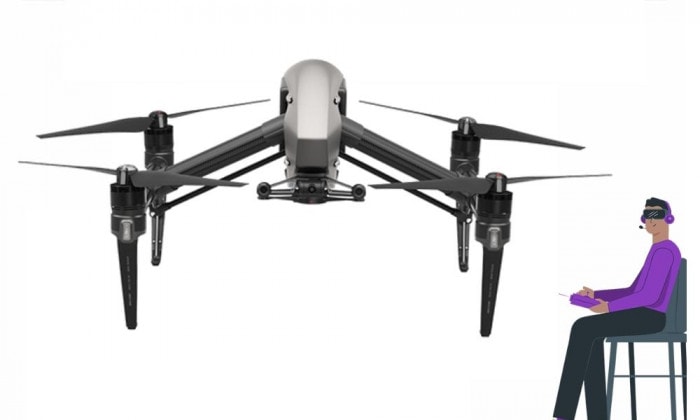
Freefly Alta X ($15,995 original, $39,650 Gen 2)
The Alta X is a heavy-lift cinema drone that carries up to 15.9 kg (35 lbs) of payload. That's enough for a full RED or ARRI cinema camera with a professional lens. Feature films and high-end commercials use the Alta X when they need a camera in the air that no consumer drone can lift.
The original Alta X costs $15,995. The Gen 2 (shipping 2026) jumps to $39,650 with an NDAA-compliant variant at $45,650 for government contracts. Add a professional cinema camera ($10,000-$50,000), a gimbal system ($5,000-$15,000), and you're looking at an aerial cinema rig that can exceed $100,000 fully loaded.
DJI FlyCart 30 ($16,590)
A cargo delivery drone. The FlyCart 30 carries up to 30 kg (66 lbs) across 16 km or 40 kg on its winch system. It's designed for delivering supplies to remote locations: mountain rescue operations, island logistics, and construction sites where road access doesn't exist. At 65 kg empty, this isn't something you throw in your car. It's a logistics vehicle.
DJI Agras T50 ($17,999)
An agricultural sprayer that carries 40 liters of liquid and covers 21 hectares (52 acres) per hour. The Agras T50 is used on commercial farms for precision spraying of pesticides, herbicides, and fertilizers. At $17,999 it replaces a manned crop-dusting aircraft that costs $300,000+, making it one of the rare cases where an expensive drone is actually the budget option.
30 kgFlyCart 30 max payload
15.9 kgAlta X camera payload
40 LAgras T50 spray tank
Flyability Elios 3 ($50,000-$76,000)
A completely different kind of expensive drone. The Elios 3 is a caged inspection drone built to fly inside boilers, storage tanks, mines, and other confined spaces where no other drone can operate. Its protective cage lets it bounce off walls and ceilings without crashing. The base model costs around $50,000; the RAD (radiation-tolerant) variant for nuclear facilities costs $76,000. It replaces the need to send human inspectors into hazardous confined spaces, which can cost $10,000-$50,000 per entry when scaffolding and safety equipment are factored in.
Custom Cinema Rigs ($50,000 to $250,000+)
At the very top of what a civilian can purchase, custom-built multi-rotor systems carry cinema cameras like the Phantom Flex4K (which shoots 1,000 fps slow motion). The Augmented Aerigon with a Phantom Flex4K has been quoted at approximately $250,000 for the complete system. These are one-off builds for major film productions, not catalog products you order online.


 FPV camera only
 10 min
 7km
7km